
UK Appliance Safety Labels – Protect Your Home
2026-06-08 16:41:21
Finding trustworthy domestic appliances in Central London can feel stressful, especially when safety and compliance are on the line. Appliance safety labels, such as the bold CE and UKCA markings, act as your immediate sign that a product meets strict legal standards required for sale in Great Britain. Understanding these essential labels empowers you to spot certified goods and avoid hidden hazards, keeping your home and family protected from electrical risks.
Table of Contents
- What Are UK Appliance Safety Labels?
- Types Of Safety Labels On Appliances
- How Safety Labelling Systems Work
- Legal Standards For Appliance Labelling
- Responsibilities For Homeowners And Tenants
- Risks Of Non-Compliance And Common Mistakes
Key Takeaways
| Point | Details |
|---|---|
| Importance of Safety Labels | UK appliance safety labels are essential for ensuring compliance with safety standards and protecting consumers from hazards. |
| Types of Safety Certifications | Key safety labels such as CE and UKCA demonstrate compliance with European and UK standards. |
| Consumer Responsibilities | Homeowners and tenants should verify safety labels, register appliances, and conduct regular inspections for safety compliance. |
| Consequences of Non-Compliance | Ignoring appliance safety standards can lead to severe risks, including electrical fires and legal liabilities. |
What Are UK Appliance Safety Labels?
UK appliance safety labels are critical visual indicators that help consumers understand the safety and regulatory compliance of electrical products. These labels provide essential information about an appliance’s conformity with national safety standards, protecting households from potential electrical hazards.
Most notably, these safety labels include important markings such as CE and UKCA (UK Conformity Assessed) certificates. UK safety markings demonstrate that electrical appliances have passed rigorous testing and meet strict health, safety, and environmental regulations required for sale in Great Britain.
Key components of these safety labels typically include:
- Manufacturer identification
- Product model number
- Electrical rating specifications
- Compliance certification marks
- Electrical safety warning symbols
- Country of manufacture
Electrical safety labels serve multiple critical functions for consumers and regulators. They help identify genuine, legally compliant products while protecting against potentially dangerous counterfeit goods. Safety standards protect consumers by reducing risks such as electric shock, fire, and other electrical malfunctions.

Pro tip: Always check for official safety certification markings before purchasing any electrical appliance, and verify the authenticity of these labels with the manufacturer’s official documentation.
Types Of Safety Labels On Appliances
UK appliances feature several critical safety labels that provide essential information about product compliance, safety standards, and environmental considerations. These visual indicators help consumers make informed decisions and understand the regulatory standards met by electrical products.
Mandatory safety certifications in the United Kingdom primarily include two key marking systems: CE (European Conformity) and UKCA (UK Conformity Assessed). These labels demonstrate that electrical appliances have successfully passed rigorous safety testing and meet stringent national and international regulatory requirements.
The primary types of safety labels found on UK appliances include:
- CE Marking: Indicates compliance with European safety directives
- UKCA Marking: Official UK product safety certification
- Energy Efficiency Labels: Displaying electrical consumption ratings
- WEEE Labels: Highlighting electronic waste recycling information
- Electrical Rating Labels: Specifying voltage, wattage, and electrical specifications
- Manufacturer Identification Labels: Showing brand and production details
Beyond mandatory certifications, voluntary environmental labels such as the EU Ecolabel provide additional insights into an appliance’s environmental performance. These labels help environmentally conscious consumers identify products with reduced ecological impact and enhanced sustainability features.
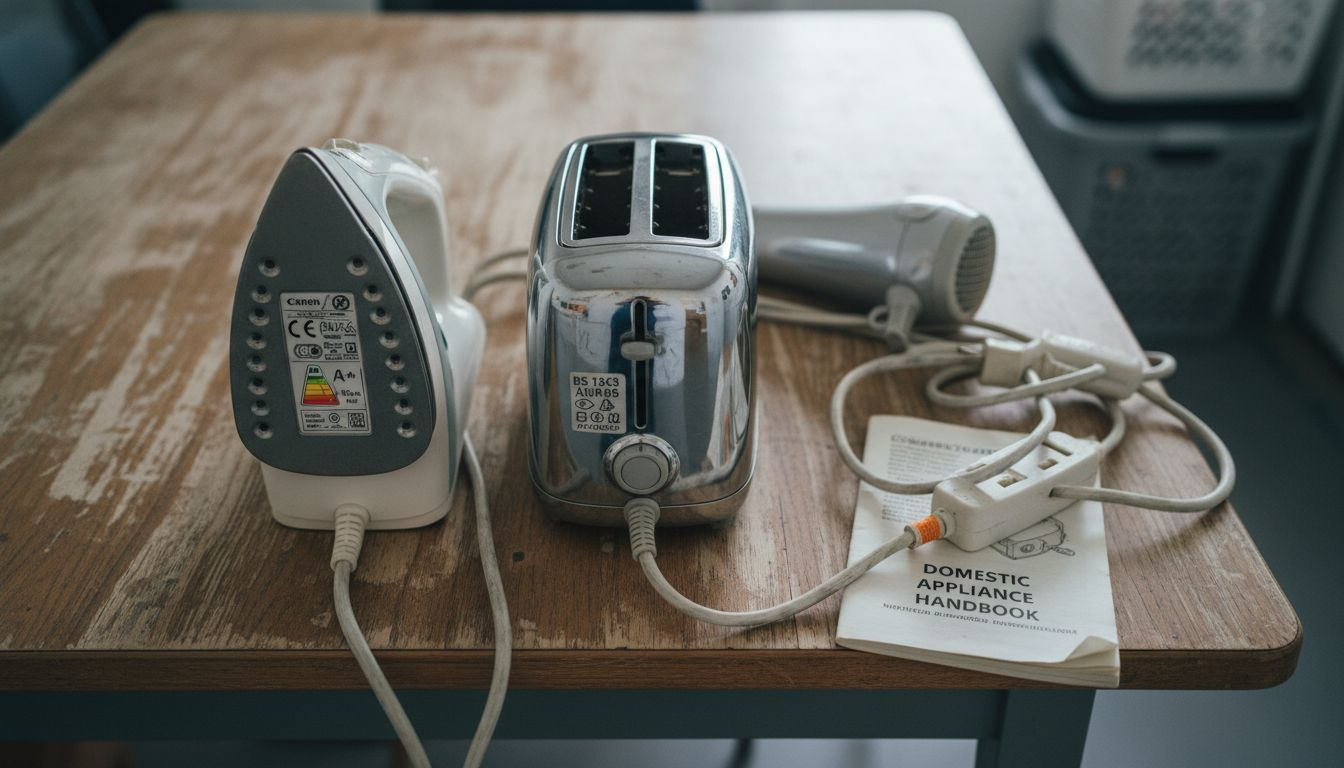
Here’s a summary of common safety labels found on UK appliances and what they indicate:
| Safety Label | Purpose | What It Signifies |
|---|---|---|
| CE Marking | European compliance | Meets EU health, safety regulations |
| UKCA Marking | UK conformity | Compliant with UK standards |
| Energy Efficiency Label | Environmental performance | Shows appliance energy rating |
| WEEE Symbol | Recycling information | Electronic waste collection guidance |
| Manufacturer ID Label | Brand authenticity | Identifies genuine product source |
Safety labels are not just stickers – they are your first line of defence in understanding an appliance’s compliance and potential risks.
Pro tip: Always photograph or save images of your appliance’s safety labels, as they contain crucial information for warranty claims, repairs, and potential insurance requirements.
How Safety Labelling Systems Work
Safety labelling systems in the United Kingdom operate through a comprehensive process of conformity assessment, ensuring that electrical appliances meet stringent safety and performance standards. These intricate systems involve multiple stakeholders, including manufacturers, regulatory bodies, and independent testing organisations, working together to protect consumer interests.
The primary mechanism involves several critical steps:
- Manufacturers conduct rigorous product testing
- Independent laboratories verify compliance
- Technical documentation is thoroughly reviewed
- Safety standards are meticulously evaluated
- Conformity assessment procedures are implemented
- Certification marks are legally authorised
Under the UK Conformity Assessment framework, manufacturers must demonstrate that their products meet all relevant safety requirements before affixing official certification labels. Energy efficiency labelling further enhances this system by providing consumers with clear, standardised information about an appliance’s performance and environmental impact.
Safety labelling is not merely a bureaucratic exercise, but a critical consumer protection mechanism that bridges manufacturers’ accountability with public safety.
The labelling process involves comprehensive documentation, including detailed technical specifications, test results, and compliance evidence. Manufacturers must ensure that labels are visible, legible, and accurately represent the product’s safety characteristics and performance capabilities.
Pro tip: Always cross-reference the safety label’s information with the manufacturer’s official documentation to verify its authenticity and comprehensive compliance.
Legal Standards For Appliance Labelling
Legal standards for appliance labelling in the United Kingdom represent a comprehensive regulatory framework designed to protect consumers and ensure product safety. These stringent requirements mandate that manufacturers meet specific criteria before placing electrical appliances on the market, with clear consequences for non-compliance.
The primary legal requirements for appliance labelling include:
- Mandatory CE or UKCA certification markings
- Detailed technical documentation
- Comprehensive safety testing
- Clear energy efficiency ratings
- Accurate product specification information
- Transparent manufacturing origin details
Under the UK Regulatory Framework, manufacturers must adhere to multiple legal obligations. Ecodesign regulations specifically outline minimum performance standards for energy-related products, ensuring that appliances meet rigorous environmental and safety benchmarks.
Legal compliance is not optional – it is a fundamental requirement for protecting consumer interests and maintaining product safety standards.
Enforcement mechanisms are robust, with potential penalties including product withdrawal, financial sanctions, and legal prosecution for manufacturers who fail to meet these critical standards. Regulatory bodies conduct systematic inspections and market surveillance to ensure ongoing compliance and protect consumer safety.
Pro tip: Always verify an appliance’s certification markings and cross-reference them with official regulatory databases to confirm their legal authenticity.
Responsibilities For Homeowners And Tenants
Homeowners and tenants play a crucial role in maintaining electrical safety within their living spaces. Electrical safety responsibilities extend beyond simply purchasing appliances, requiring active engagement and vigilant monitoring of product safety standards and potential risks.
Key responsibilities for homeowners and tenants include:
- Verifying safety labels on all electrical appliances
- Registering new appliances with manufacturers
- Conducting regular visual safety inspections
- Monitoring manufacturer recall notifications
- Maintaining appliances according to manufacturer guidelines
- Replacing damaged electrical equipment promptly
Under UK regulations, residents must stay informed about potential safety alerts. Product safety notifications require immediate action when manufacturers or authorities identify potential hazards with specific appliance models, including discontinuing use and following official guidance.
Your home’s electrical safety is a shared responsibility between manufacturers, regulators, and you as an informed consumer.
Financial and legal implications can arise from neglecting these responsibilities. Homeowners and tenants who fail to address known safety issues may be held liable for accidents or damages caused by unmaintained or non-compliant electrical equipment.
The table below contrasts appliance safety responsibilities and enforcement in the UK:
| Aspect | Consumer Duties | Regulatory Enforcement |
|---|---|---|
| Safety Label Checks | Verify labels before purchasing | Inspect for accurate certification |
| Documentation | Retain manuals and certificates | Require technical documentation |
| Recall Action | Respond quickly to alerts | Issue product safety notices |
| Maintenance | Follow manufacturer guidelines | Enforce regular product auditing |
Pro tip: Create a dedicated folder or digital file to store all appliance manuals, registration documents, and safety certificates for quick reference during maintenance or potential recall situations.
Risks Of Non-Compliance And Common Mistakes
Electrical safety non-compliance poses significant risks to homeowners and tenants, potentially leading to catastrophic consequences that extend far beyond simple regulatory infractions. Understanding these risks is crucial for maintaining a safe living environment and protecting both personal property and human life.
Common mistakes that compromise appliance safety include:
- Purchasing uncertified electrical products
- Ignoring manufacturer recall notifications
- Using damaged electrical equipment
- Buying from unregulated online marketplaces
- Disregarding safety label warnings
- Failing to conduct regular safety inspections
The potential consequences of these mistakes can be severe. Product safety regulations highlight that non-compliant appliances significantly increase the risk of electrical fires, shock incidents, and potential personal injury. Homeowners may also face legal and insurance complications if accidents occur due to knowingly using non-standard equipment.
Safety compliance is not an option – it is a fundamental responsibility that protects lives and property.
Financial repercussions can be substantial, with potential scenarios including invalidated home insurance policies, legal liabilities, and significant repair or replacement costs. Insurers often refuse claims where non-compliant electrical equipment is identified as the root cause of damage or injury.
Pro tip: Always retain original purchase receipts and safety documentation for electrical appliances, creating a comprehensive record that can prove compliance in potential insurance or legal scenarios.
Ensure Your Home’s Safety With Expert Appliance Repairs
Understanding the critical role of UK appliance safety labels like UKCA and CE Marking is just the beginning. Many homeowners face challenges verifying compliance and maintaining their appliances to prevent risks such as electrical fires or shocks. If you want peace of mind knowing your electrical products are safe, regular professional inspections and repairs are essential.
Protect your family and property by choosing reliable domestic appliance repairs in London from Elserve. Our expert engineers ensure that your appliances meet all relevant safety standards and help you avoid common pitfalls like using uncertified or faulty equipment. Act now to secure your home against electrical hazards and stay compliant with UK safety regulations. Visit us today at https://elserve.co.uk to schedule your repair or safety check and take control of your home’s electrical safety.
Frequently Asked Questions
What do UK appliance safety labels indicate?
UK appliance safety labels indicate that electrical products conform to national safety standards, ensuring consumer protection from potential hazards. They provide information such as compliance certificates, electrical ratings, and safety warning symbols.
What are the main types of safety labels on appliances?
The main types of safety labels on appliances include CE marking, UKCA marking, energy efficiency labels, WEEE labels, electrical rating labels, and manufacturer identification labels, which provide vital information regarding safety and compliance.
How can I ensure my appliance is safe?
To ensure your appliance is safe, check for official safety certification markings such as CE or UKCA, verify information with the manufacturer’s documentation, and conduct regular visual inspections for damage or wear.
What are the risks of using non-compliant appliances?
Using non-compliant appliances can significantly increase the risk of electrical fires, shocks, and injuries. Additionally, homeowners may face legal liabilities and complications with insurance claims if accidents occur due to unregulated equipment.
Recommended
- Most Reliable Appliance Brands for London Households - Elserve I Quality Appliance Repairs in 2 Hour Time Slots
- Industry News - Elserve I Quality Appliance Repairs in 2 Hour Time Slots
- Blog - Elserve I Quality Appliance Repairs in 2 Hour Time Slots
- Maintaining and Servicing your Appliances: A Long-Term Investment - Elserve I Quality Appliance Repairs in 2 Hour Time Slots
- Bath Safety for Toddlers: Preventing Common Hazards – Lotus Linen
- Steg-for-steg guide til kjøkkenrenovering hjemme
- Gas Line Inspections and Why They Matter for Home Inspections
Recent Post
_(2)_(1).png)
Elserve Featured by USA News for Trusted Appliance Repairs in London
2026-10-18 17:01:41

Act Fast: Signs of Faulty Wiring in London Homes, £42 Diagnostics
2026-10-10 08:12:45

ELSERVE Joins Which? Trusted Traders
2026-09-30 15:29:14
 Looking for a fast and reliable appliance repair service?




ELSERVE is a registered company in England. Registered number 09798443. VAT number 407675383
Some images used on this website are stock photographs used for illustrative purposes only and may not depict ELSERVE employees, customers, or actual service visits

-
Elserve Featured by USA News for Trusted Appliance Repairs in London
2026-10-18 17:01:41
-
Act Fast: Signs of Faulty Wiring in London Homes, £42 Diagnostics
2026-10-10 08:12:45
-
ELSERVE Joins Which? Trusted Traders
2026-09-30 15:29:14