
Electric vs Gas Ovens: What Suits London Homes?
2026-03-03 18:15:04
Choosing between an electric or gas oven can feel like a major decision for any Central London homeowner aiming to blend style, safety, and performance in their kitchen. With growing interest in healthier indoor air and greater energy efficiency, the debate is shifting as more people explore the true advantages and trade-offs of each technology. This guide breaks down the fundamental differences, offering straightforward insights that help you match your kitchen needs to the right oven for your home.
Table of Contents
- Electric vs Gas Ovens Defined Clearly
- Types of Ovens and Key Differences
- How Each Oven Type Performs Daily
- Installation, Safety, and Energy Rules in 2026
- Running Costs, Upkeep, and Common Pitfalls
- Choosing the Right Oven for Your Needs
Key Takeaways
| Point | Details |
|---|---|
| Heat Generation | Electric ovens provide uniform heat distribution and precise temperature control, while gas ovens offer rapid temperature adjustments with open flame heating. |
| Energy Efficiency | Modern trends favour electric ovens due to their advantages in energy efficiency and indoor air quality considerations. |
| Installation & Maintenance | Electric ovens are easier to install in various kitchen layouts and require less frequent maintenance compared to gas ovens, which need regular checks. |
| Culinary Preferences | The choice between electric and gas ovens should align with individual cooking styles, budget constraints, and kitchen infrastructure. |
Electric vs Gas Ovens Defined Clearly
Navigating the culinary landscape of London homes requires understanding the fundamental differences between electric and gas ovens. These two cooking appliances represent distinct technologies with unique characteristics that can significantly impact your cooking experience, energy efficiency, and kitchen design.
At their core, electric and gas ovens differ fundamentally in their heat generation method. European consumer perspectives reveal growing preferences for electric cooking technologies, driven by several critical factors:
- Heat Distribution: Electric ovens typically provide more uniform heat circulation
- Temperature Control: Electric models offer more precise temperature management
- Installation Flexibility: Electric ovens can be installed in more varied kitchen configurations
- Safety Considerations: Lower risk of gas emissions and indoor air quality concerns
Gas ovens, traditionally popular in British kitchens, operate through direct flame heating. They use natural gas or propane to generate heat instantly, which appeals to professional chefs and home cooks who prefer immediate temperature adjustments. Unlike electric ovens that rely on heating elements, gas models create heat through an open flame, allowing for more dynamic cooking techniques.
The ongoing transition from gas to electric cooking technologies has been extensively documented by OECD cooking fuel research, highlighting significant shifts in consumer preferences. Modern London homeowners increasingly prioritise energy efficiency, indoor air quality, and sustainable cooking solutions when selecting kitchen appliances.
Pro tip: Before selecting an oven, assess your specific cooking needs, kitchen layout, and existing gas or electrical infrastructure to make the most informed decision.
Here is a concise summary of key advantages and drawbacks for electric and gas ovens:
| Aspect | Electric Oven Advantage | Gas Oven Advantage |
|---|---|---|
| Temperature Stability | Exceptionally steady heat | Rapid changes possible |
| Moisture Control | Drier cooking results | Retains more moisture |
| Maintenance Needs | Fewer mechanical checks | Needs regular inspections |
| Initial Installation | Simple in most kitchens | Requires gas connection |
| Running Cost (UK avg) | Usually higher per kWh | Lower ongoing energy expense |
Types of Ovens and Key Differences
Ovens represent complex appliances with significant technological variations that impact cooking performance, energy efficiency, and overall kitchen functionality. Understanding the nuanced differences between oven types helps homeowners make informed purchasing decisions tailored to their specific culinary needs.
Comprehensive oven technology comparisons reveal several distinct oven categories that dominate the modern kitchen landscape:
- Electric Conventional Ovens: Standard models with heating elements at top and bottom
- Convection Electric Ovens: Incorporate internal fans for more uniform heat distribution
- Gas Ovens: Utilise open flame heating mechanisms
- Dual-Fuel Ovens: Combine gas cooktops with electric oven functionality
- Steam Ovens: Emerging technology using water vapour for cooking
Electric ovens offer remarkable precision in temperature control and heat distribution. Detailed appliance research indicates that electric models provide more consistent heating environments, making them ideal for delicate baking procedures that require uniform temperature maintenance.
Gas ovens, by contrast, provide more responsive heat generation and typically feature lower operational costs. Professional chefs often prefer gas ovens for their immediate temperature adjustments and dynamic cooking capabilities. However, they can present slightly less uniform heat distribution compared to their electric counterparts.
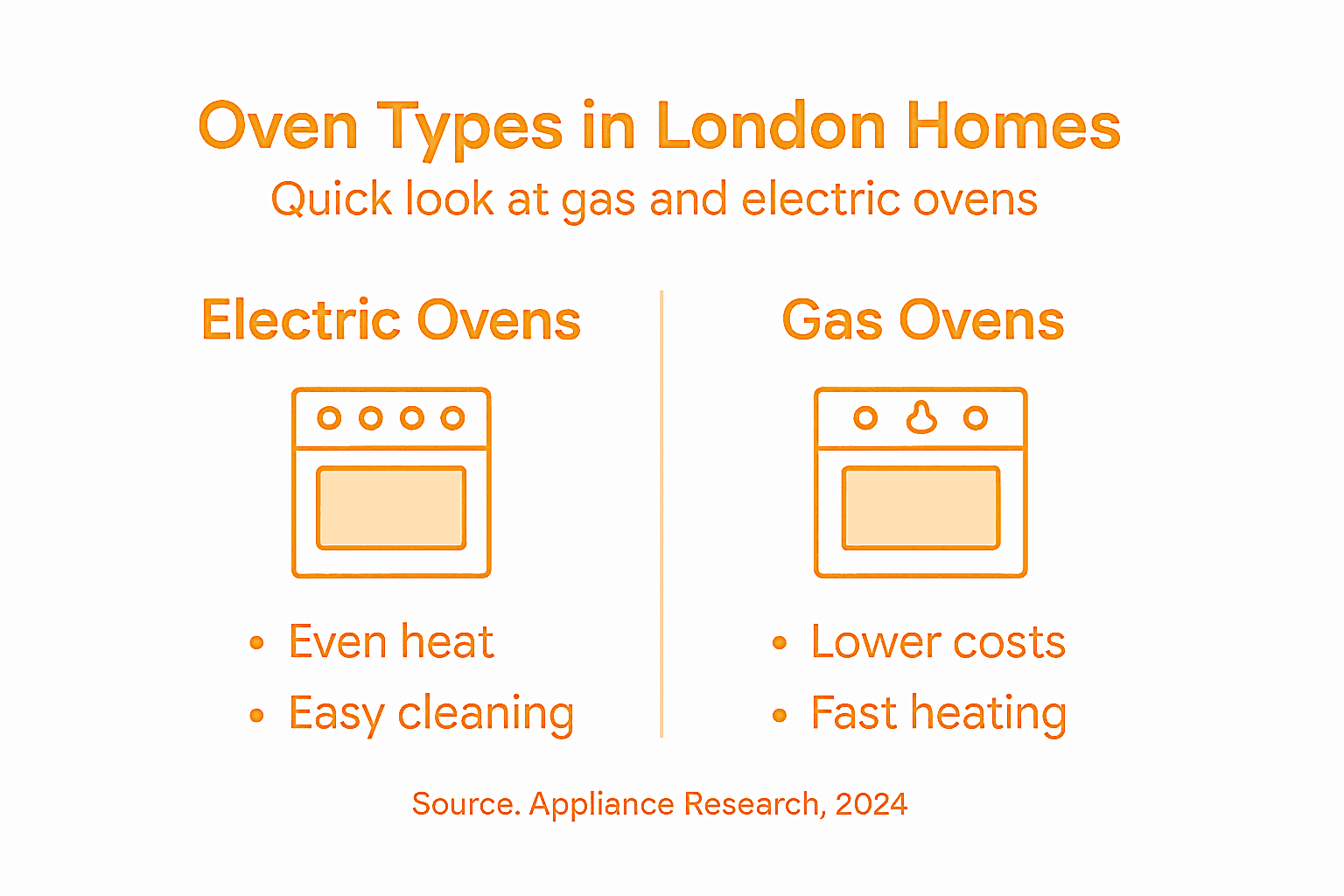
Modern oven technologies continue evolving, with manufacturers introducing hybrid models that combine the best characteristics of different heating mechanisms. These innovations aim to address traditional limitations while providing more flexible cooking experiences for diverse culinary requirements.
Pro tip: Consider your specific cooking habits, kitchen infrastructure, and budget when selecting an oven type to ensure optimal performance and long-term satisfaction.
To help you compare oven options at a glance, see this overview of oven technologies:
| Oven Type | Best For | Notable Limitation |
|---|---|---|
| Electric Conventional | Everyday baking & roasting | Slower heat-up time |
| Convection Electric | Even multi-shelf baking | Slightly higher purchase cost |
| Gas | Fast, responsive cooking | Possible uneven temperature zones |
| Dual-Fuel | Versatile, all-round use | Increased installation complexity |
| Steam | Healthier, moist cooking | Smaller baking crispness potential |
How Each Oven Type Performs Daily
Daily kitchen performance varies significantly between electric and gas ovens, with each technology presenting unique strengths and challenges for London home cooks. Understanding these nuanced differences helps residents select the most suitable appliance for their culinary routines.
Performance characteristics of cooking technologies reveal distinct operational behaviours across different oven types:
- Electric Ovens: Provide consistent, uniform heating
- Gas Ovens: Offer rapid temperature adjustments
- Convection Electric Ovens: Distribute heat more evenly
- Traditional Gas Ovens: Create slightly more moisture during cooking
Electric ovens excel in maintaining steady temperatures, making them ideal for delicate baking procedures that require precise heat management. Professional bakers often prefer electric models for their ability to create uniform browning and consistent results across multiple dishes simultaneously.

Cooking appliance performance analysis indicates that gas ovens provide more dynamic heat control, allowing chefs to make immediate temperature modifications. This responsiveness makes gas ovens particularly attractive for techniques requiring quick heat transitions, such as searing meats or preparing dishes that demand rapid cooking adjustments.
The moisture content differs between oven types, with gas ovens naturally producing more humid cooking environments. This characteristic can benefit certain recipes like roasted meats, which benefit from internal moisture retention, while potentially challenging bakers seeking crisp, dry baking conditions.
Pro tip: Consider running a simple temperature calibration test on your new oven to understand its unique heat distribution and adjust your cooking techniques accordingly.
Installation, Safety, and Energy Rules in 2026
The landscape of domestic oven technologies is undergoing significant regulatory transformation, with upcoming European standards poised to reshape how London homeowners approach appliance selection, installation, and energy consumption. These emerging guidelines represent a critical intersection of consumer safety, environmental responsibility, and technological innovation.
European energy efficiency regulations for domestic ovens introduce comprehensive changes across multiple domains:
- Energy Labelling: Mandatory detailed consumption ratings
- Emission Standards: Stricter limits on NOx and carbon outputs
- Installation Requirements: Enhanced safety protocols
- Reparability Guidelines: Increased focus on long-term appliance sustainability
Gas ovens face particularly stringent scrutiny, with consumer safety organisations advocating for more robust indoor air quality standards. The new regulations specifically target harmful nitrogen oxide emissions, requiring manufacturers to develop technologies that minimise potential health risks associated with gas cooking appliances.
Electric ovens will simultaneously undergo significant transformations, with standby power consumption becoming a critical metric. Manufacturers must now design appliances that consume minimal electricity during inactive periods, reflecting a broader commitment to energy conservation and reduced environmental impact.
The holistic approach of these regulations demonstrates a nuanced understanding of domestic appliance ecosystems, balancing technological innovation, consumer safety, and environmental sustainability in a single comprehensive framework.
Pro tip: Consult with a professional installer who understands the 2026 regulations to ensure your new oven meets all emerging safety and energy efficiency standards.
Running Costs, Upkeep, and Common Pitfalls
Understanding the financial and maintenance landscape of domestic ovens requires careful consideration of both initial investment and long-term operational expenses. London homeowners must navigate a complex terrain of running costs, potential repair requirements, and technological nuances specific to different oven types.
UK-based operational cost analysis reveals critical financial insights for potential oven owners:
- Gas Ovens: Lower per-kWh running costs
- Electric Ovens: Higher electricity consumption expenses
- Maintenance Complexity: Gas ovens require more frequent professional servicing
- Long-Term Investment: Initial purchase price versus ongoing operational expenses
Gas ovens present unique maintenance challenges, requiring regular professional interventions to ensure safe and efficient operation. Comprehensive appliance maintenance research highlights several critical maintenance considerations:
- Regular gas leak inspections
- Annual burner cleaning and calibration
- Checking seal integrity
- Monitoring flame consistency
Electric ovens, while generally more straightforward to maintain, are not without their own potential pitfalls. Heating element degradation, electrical connection issues, and temperature calibration challenges can emerge over time, necessitating periodic professional assessment and potential component replacement.
The financial calculus of oven ownership extends beyond simple purchase price, encompassing energy consumption, maintenance frequency, potential repair costs, and overall operational efficiency. Savvy homeowners must consider these multifaceted factors when making their selection.
Pro tip: Request a comprehensive energy efficiency assessment before purchasing your oven to understand the true lifetime operational costs.
Choosing the Right Oven for Your Needs
Selecting the ideal oven for your London home represents a nuanced decision that extends far beyond simple appliance selection. The choice between electric and gas ovens demands careful consideration of personal cooking styles, kitchen infrastructure, and long-term financial implications.
Comprehensive oven selection criteria reveal several critical factors homeowners must evaluate:
- Cooking Style: Match oven technology to culinary preferences
- Budget: Consider initial purchase and ongoing operational costs
- Kitchen Configuration: Assess existing gas or electrical infrastructure
- Performance Requirements: Prioritise heating precision or responsiveness
Professional chefs and passionate home cooks understand that different oven technologies offer distinct advantages. Detailed appliance comparison research highlights key performance variations that can significantly impact cooking outcomes.
Electric ovens excel in providing consistent, uniform heating - an essential characteristic for precision baking and delicate pastry work. Their even temperature distribution ensures predictable results, making them ideal for those who prioritise accuracy over rapid heat adjustments. Gas ovens, conversely, offer immediate temperature control and faster heat generation, appealing to cooks who value responsiveness and dynamic cooking techniques.
The decision ultimately transcends technical specifications, encompassing personal cooking philosophies, environmental considerations, and practical home kitchen constraints. Savvy consumers will weigh multiple factors, recognising that the perfect oven is a deeply personalised choice.
Pro tip: Before making a final decision, borrow or test different oven types to experience their unique cooking characteristics firsthand.
Choose the Perfect Oven for Your London Home with Expert Support
Selecting between electric and gas ovens poses real challenges whether it’s understanding energy efficiency or ensuring safe installation in line with 2026 regulations. Many London homeowners feel overwhelmed balancing temperature control, running costs, and maintenance needs while aiming for reliable and safe kitchen appliances. If you have experienced issues with oven performance or need advice on maintaining your electric or gas oven, professional help is only a click away.
Act today to safeguard your cooking experience with trusted domestic appliance repairs in London. At Elserve, we specialise in servicing all types of ovens ensuring they meet the latest safety standards and operate efficiently. Don’t let unresolved oven faults disrupt your daily routine—visit our reliable repair services now and get peace of mind about your kitchen appliances. Explore more on selecting, maintaining or repairing your oven to enjoy consistent, safe cooking at home.
Frequently Asked Questions
What are the main differences between electric and gas ovens?
Electric ovens generate heat through electric elements, providing more uniform heat distribution, while gas ovens use an open flame for instant heat. This leads to different cooking characteristics and temperature control.
Which type of oven offers better temperature control for baking?
Electric ovens are known for their precise temperature management and steady heat, making them ideal for delicate baking that requires consistent temperatures for optimal results.
Are gas ovens more cost-effective to run than electric ovens?
Generally, gas ovens tend to have lower running costs compared to electric ovens, although this can vary based on energy prices and usage patterns. It’s essential to consider both initial costs and ongoing expenses when choosing an oven.
Which oven type is safer for indoor air quality?
Electric ovens are typically safer regarding indoor air quality since they do not emit harmful gases. On the other hand, gas ovens can produce nitrogen oxide emissions, which may affect indoor air quality if not properly vented.
Recommended
- Industry News - Elserve I Quality Appliance Repairs in 2 Hour Time Slots
- Blog - Elserve I Quality Appliance Repairs in 2 Hour Time Slots
- Makes - Elserve I Quality Appliance Repairs in 2 Hour Time Slots
- ELSERVE’s Top Tips: Ensure Your Oven is Ready for Christmas - Elserve I Quality Appliance Repairs in 2 Hour Time Slots
- 7 Kitchen Upgrade Ideas 2025 for Smart English Homes - WordPress
- Smart Kitchen Gadgets Foodies - Top Picks + Tips
Recent Post

Act Fast: Signs of Faulty Wiring in London Homes, £42 Diagnostics
2026-10-10 08:12:45

ELSERVE Joins Which? Trusted Traders
2026-09-30 15:29:14

How to fix a slow spin cycle in your washing machine
2026-09-20 03:37:36
 Looking for a fast and reliable appliance repair service?




ELSERVE is a registered company in England. Registered number 09798443. VAT number 407675383
Some images used on this website are stock photographs used for illustrative purposes only and may not depict ELSERVE employees, customers, or actual service visits



-
Act Fast: Signs of Faulty Wiring in London Homes, £42 Diagnostics
2026-10-10 08:12:45
-
ELSERVE Joins Which? Trusted Traders
2026-09-30 15:29:14
-
How to fix a slow spin cycle in your washing machine
2026-09-20 03:37:36