
Why your washing machine trips the fuse: what to check
2026-10-24 16:36:57
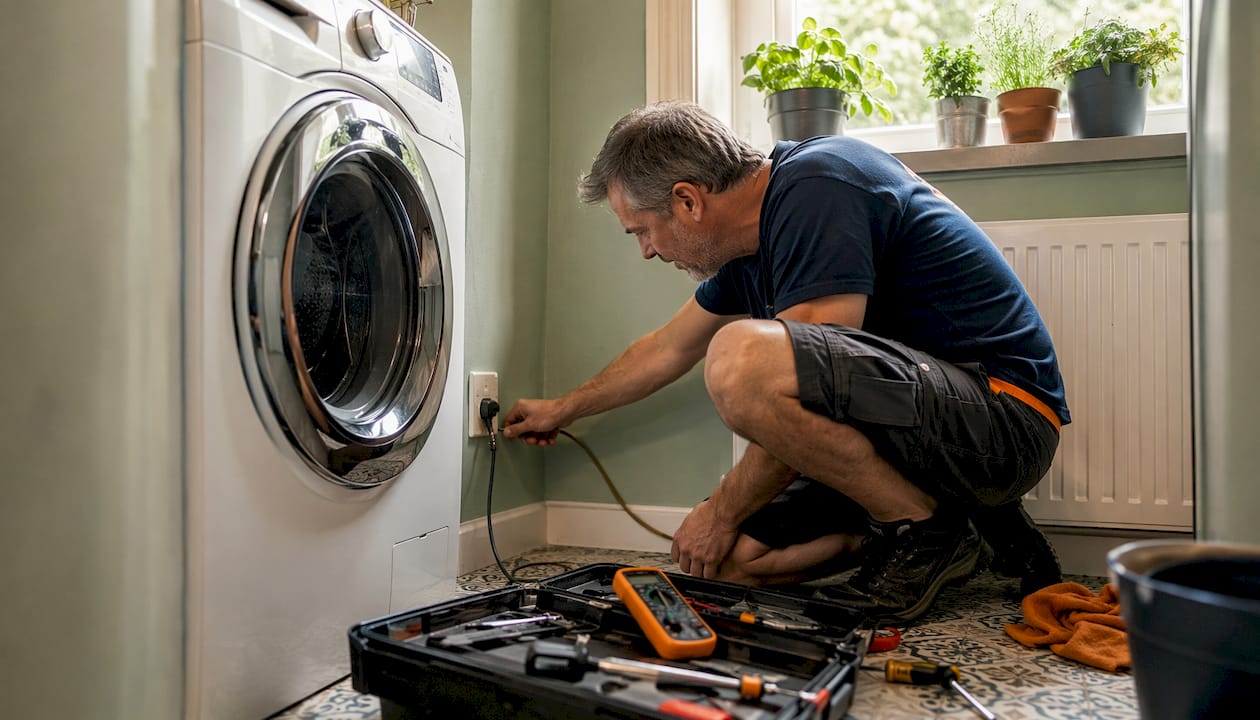
A washing machine trips the fuse or RCD for one of two electrical reasons: earth leakage caused by insulation failure, or a short circuit or overcurrent fault. If your machine has just tripped the circuit, the immediate steps are straightforward.
- Switch off and unplug the washing machine at the wall socket.
- Go to your consumer unit and reset the tripped RCD or MCB by pushing the lever back up.
- Do not plug the machine back in until you have worked through the checks below.
- Never bypass an RCD or fit a higher-rated fuse to stop the tripping.
The HSE guidance on RCD protection confirms that an RCD trip is a genuine safety signal, not a nuisance fault. The device is doing exactly what it was designed to do.
Table of Contents
- Why does a washing machine trip the fuse or RCD?
- How to safely check your washing machine at home
- Mapping symptoms to likely causes
- RCD trips versus fuse or MCB trips: why the difference matters
- When to stop and call a qualified engineer
- Key takeaways
Why does a washing machine trip the fuse or RCD?
The most common internal faults causing trips are a failed heating element, worn motor insulation or carbon brushes, a defective mains interference suppressor, a faulty drain pump, a damaged door interlock, chafed wiring, and water leaks reaching live electrical parts. Each fault produces a slightly different pattern, and that pattern is your most useful diagnostic clue.
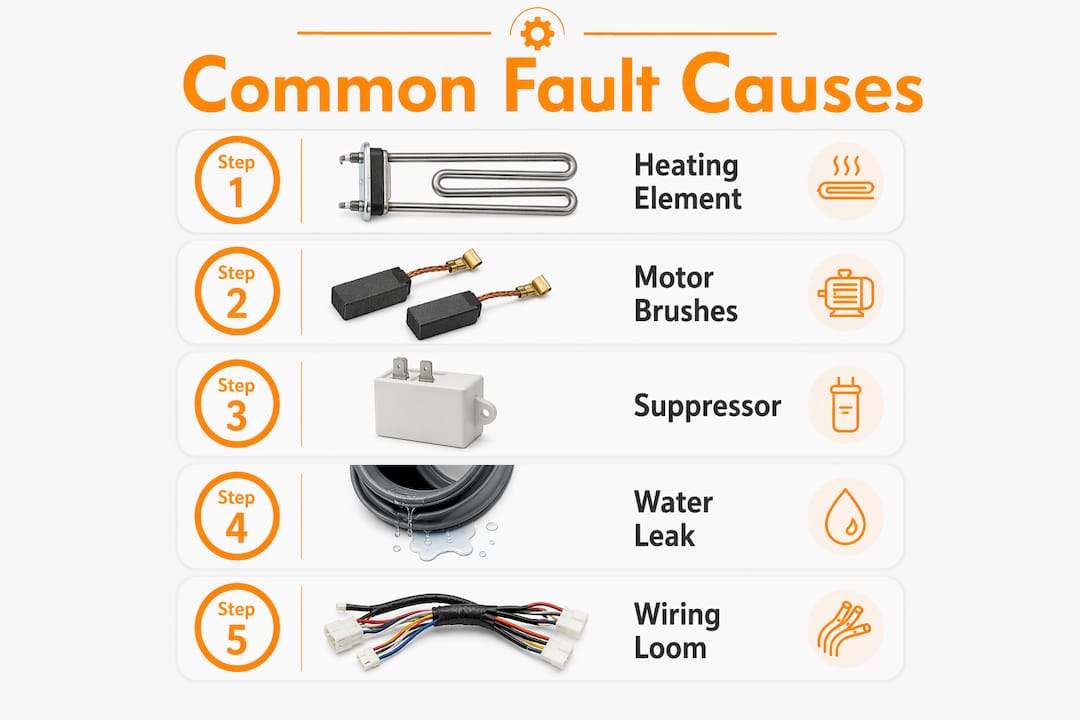
Heating element. Insulation around the element degrades over time, particularly in hard-water areas. Once the element reaches operating temperature, the degraded insulation allows current to leak to earth and the RCD trips. The machine typically runs normally through the fill and early drum rotation, then cuts out once heating begins.
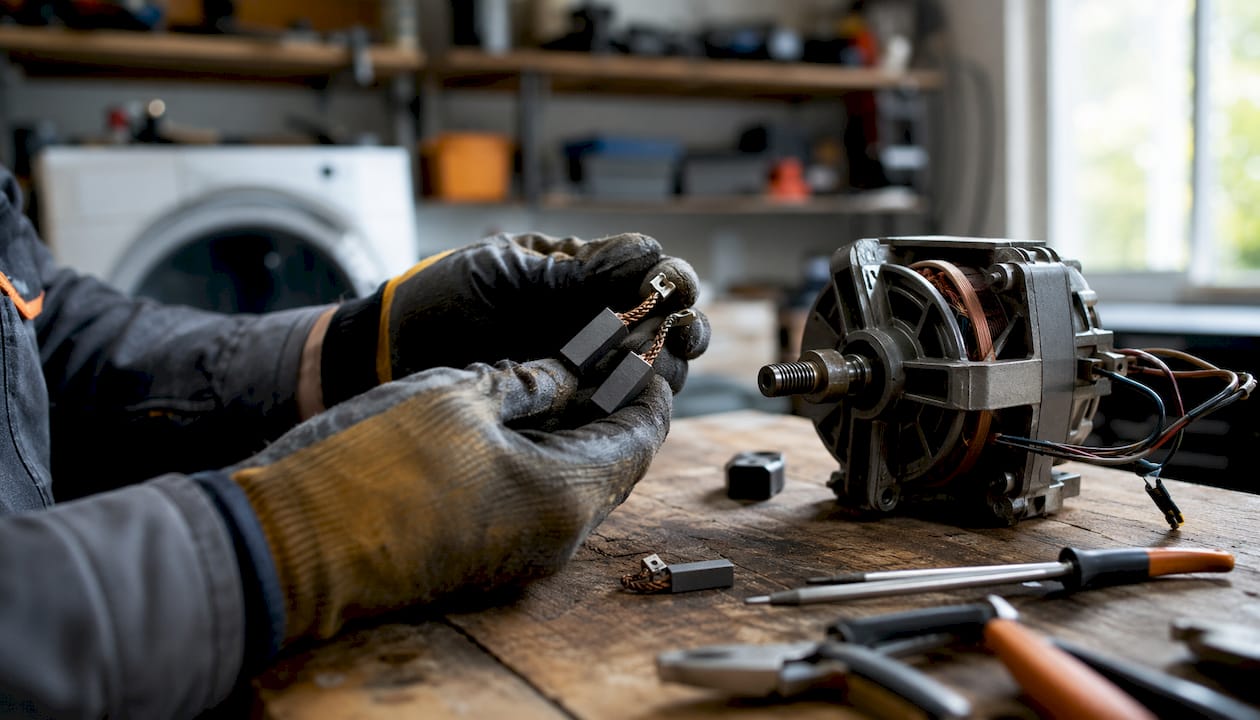
Motor. Carbon brush wear or coil insulation breakdown can cause a trip during or immediately before the spin cycle, when the motor draws its highest current. Brushless motors can also develop faults in the capacitor or motor control board.
Mains interference suppressor. This component is energised the moment mains power is applied, so a faulty suppressor often trips the circuit instantly on plug-in, before any programme has started.
Water leaks and damp locations. A slow internal leak can track along wiring or reach low-voltage control modules, producing intermittent trips that are difficult to reproduce consistently. Machines kept in unheated garages or outbuildings are particularly susceptible, as dampness in unheated areas is a recurring cause of electrical faults.
Wiring loom and door lock. Concrete balance weights inside the drum cabinet can chafe against the wiring loom over years of vibration. The door lock can also develop an internal arc or burn-out, causing a trip at the start of the cycle when the lock engages.
Pro Tip: Note the exact moment the trip occurs: on plug-in, during fill, during heating, or on spin. Write down the programme selected and any error code displayed. This information alone can reduce a diagnostic visit by a significant margin, as the engineer can target the most likely component immediately.
How to safely check your washing machine at home
These checks are non-invasive and safe for any homeowner or renter to carry out. Do not open the machine casing or test any internal component while the machine is connected to the mains.
- Check for visible water. Look under and around the machine for any pooled water or damp patches. A leak reaching electrical parts is a common cause of fuse blowing, and continuing to use the machine in this condition is unsafe.
- Inspect the mains cable and plug. Examine the full length of the cable for cuts, kinks, or scorch marks. Check the plug for burn marks or a loose connection. A damaged lead is one of the few faults a homeowner can address directly, by replacing the plug or cable before use.
- Check the socket. Confirm the wall socket is not damaged and that the machine is plugged directly into it. Extension cables generally lack the capacity for high-draw appliances and introduce a circuit overload risk.
- Perform the isolation test. Unplug the washing machine and any other appliances on the same circuit. Reset the RCD or MCB at the consumer unit. Plug only the washing machine back in and run a short programme while observing when, or whether, the trip recurs. This stepwise reconnection method confirms whether the fault lies with the appliance or the household wiring.
- Check for a shared circuit. Running a washing machine and a tumble dryer on the same 13 A circuit simultaneously can exceed the circuit rating and cause trips unrelated to any appliance fault.
Stop immediately and call an engineer if you observe smoke, a burning smell, visible arcing, or if the trip recurs the moment the machine is reconnected.
Mapping symptoms to likely causes
Timing and accompanying signs point reliably to specific components. The table below maps the most common observations to their probable cause and a safe confirming check.
| When it trips | Accompanying signs | Most likely cause | Safe confirming check |
|---|---|---|---|
| Instantly on plug-in | No programme started | Mains interference suppressor | Unplug; if RCD resets cleanly, suppressor is prime suspect |
| During fill, drum not yet turning | No unusual noise | Water inlet valve or wiring near inlet | Check for visible water around inlet hose connections |
| Once heating begins | No noise; machine was running normally | Heating element insulation failure | Note programme temperature; report to engineer |
| On spin cycle | Drum vibration, occasional only | Chafed wiring loom or motor fault | Check cable routing at back of machine for visible damage |
| Intermittently, no clear pattern | Damp smell, machine in garage | Water tracking from leak or condensation | Inspect base of machine for moisture; check location |
Intermittent faults, such as those caused by chafed wiring or water tracking, are inherently more difficult to reproduce and diagnose than consistent faults like heater insulation breakdown. A fault that only appears under mains voltage and operating temperature cannot be detected with a standard multimeter; it requires dedicated insulation testing equipment.
Incorrect detergent use can occasionally produce suds that track into the door lock and wiring, mimicking component failure. Cleaning the door seal area and switching to the correct detergent dose sometimes resolves intermittent trips before any component replacement is needed.
RCD trips versus fuse or MCB trips: why the difference matters
An RCD and an MCB protect against different types of fault, and understanding the distinction helps you describe the problem accurately to an engineer or electrician.
| Protection device | What it detects | Typical threshold | Common washing machine fault that triggers it |
|---|---|---|---|
| RCD | Current leakage to earth | 30 mA | Heating element insulation failure, motor earth fault, water on live parts |
| MCB or fuse | Overcurrent or short circuit | 13 A (plug fuse) | Direct short circuit, circuit overload from multiple high-draw appliances |
| RCBO | Both leakage and overcurrent | Combined | Any of the above |
An RCD trip almost always indicates earth leakage, which is a genuine insulation or water-ingress fault. An MCB or plug fuse trip points more often to overcurrent, which may be a direct short inside the machine or simply too many appliances sharing one circuit. The Electrolux support guidance notes that combining a washing machine and tumble dryer on a single 13 A circuit is a common cause of non-fault-related tripping.
Never fit a higher-rated fuse or attempt to disable an RCD to prevent tripping. Doing so removes the protection the device provides and creates a genuine risk of electric shock or fire.
When to stop and call a qualified engineer
Some observations are clear indicators that the machine should not be used again until a professional has inspected it.
- Persistent trips after completing the isolation test with only the washing machine connected.
- Any smell of burning or visible scorch marks on the plug, cable, or machine body.
- Smoke or visible arcing at any point during operation.
- Trips that affect multiple circuits in the consumer unit simultaneously.
- A trip that recurs on every wash without variation, suggesting a consistent insulation fault rather than an intermittent one.
When you contact an engineer, the following information will make the diagnostic visit faster and more productive:
- Exactly when in the cycle the trip occurs (on plug-in, during fill, during heating, on spin).
- The programme selected and the wash temperature.
- Whether the trip is consistent or intermittent.
- Any error codes displayed on the machine panel.
- Details of any recent repairs, leaks, or changes to the machine’s location.
- A photograph of the consumer unit, if it is safe to take one.
Most diagnostic visits by a qualified appliance engineer resolve the cause within a single appointment, particularly when the timing of the fault has been documented in advance. Book a repair visit with Elserve if you would prefer a professional to carry out the assessment.
Standards and safety thresholds behind these recommendations
The advice in this article is grounded in established electrical safety standards and HSE guidance.
- The HSE confirms that RCDs must trip at no more than 30 mA to provide effective life-saving protection. A current of 30 mA passing through the torso is sufficient to cause cardiac arrest if it persists for more than a fraction of a second.
- The IEC 60335-2-7 standard for household washing machine safety addresses leakage currents and transient overvoltages, and manufacturers specify that protective devices must never be bypassed.
- Manufacturer guidance, including Bosch support documentation, consistently advises against sharing a washing machine circuit with other high-draw appliances.
- Insulation testing requires a dedicated instrument (commonly called a megger or insulation resistance tester) that applies a test voltage comparable to mains stress. A standard multimeter operating at low voltage cannot replicate the conditions under which insulation breakdown occurs, which is why internal electrical diagnosis must be carried out by a qualified professional.
Key takeaways
A washing machine trips the fuse or RCD because of earth leakage from insulation failure or a short circuit, and the exact timing of the trip is the single most useful clue for identifying the faulty component.
| Point | Details |
|---|---|
| Isolate before resetting | Unplug the machine before resetting the RCD or MCB at the consumer unit. |
| Perform the isolation test | Reconnect only the washing machine and run a programme to confirm whether the fault is in the appliance or the circuit. |
| Document the timing | Note when in the cycle the trip occurs; this information directly guides the engineer to the likely component. |
| Never bypass protection | Do not fit a higher-rated fuse or disable an RCD; the device is protecting against a genuine fault. |
| Call a professional for internal faults | Insulation testing requires specialist equipment; do not open the machine or test live circuits. |
A note on timing-based diagnosis
There is a tendency, understandable given the inconvenience of a machine that will not run, to focus on the trip itself rather than on when it happens. The timing, however, is where the diagnostic value lies. A machine that trips instantly on plug-in is pointing to a very different fault from one that runs a full wash and trips only when the drum accelerates into spin. Treating both as simply “the machine trips” leads to unnecessary component replacements and extended repair times.
The other point worth making is that intermittent faults are genuinely more hazardous than consistent ones, not less. A fault that only appears occasionally may be caused by water tracking along a wiring path that is not yet fully compromised, or by insulation that breaks down only under thermal stress. These faults tend to worsen progressively. Using the machine while waiting for a repair, on the assumption that it “usually works fine,” is not a sound approach.
Elserve’s engineers carry out appliance diagnostics with the kind of timing-based methodology described here, which is why providing the information in the checklist above before a visit genuinely reduces call-out time and the likelihood of a return appointment.
Useful sources and manufacturer support
Model-specific manuals are the definitive reference for machine-specific diagnostics and should be consulted before any internal work is attempted.
- HSE — Electrical equipment at work: hse.gov.uk/electricity/electricequip.htm — guidance on RCD use, testing, and thresholds.
- IEC 60335-2-7 (household washing machine safety standard): standards.iteh.ai — the international standard governing leakage currents and protective device requirements.
- Bosch Home Appliances support: bosch-home.com/gb/service — model-specific manuals, error codes, and authorised service contacts.
- Whitegoods Help — washing machine tripping electrics: whitegoodshelp.co.uk — detailed component-level guidance on fault patterns and timing.
- Elserve appliance repair service: elserve.co.uk — qualified engineers for washing machine diagnostics and repair, with 2-hour appointment windows.
- Washer maintenance guidance: how to flush your washer — practical maintenance steps that can reduce the risk of leak-related electrical faults.
This article provides general information for guidance purposes only and does not constitute professional electrical or safety advice. Always consult a qualified electrician or appliance engineer for your specific situation, and refer to the primary sources above for current regulatory requirements.
Recommended
Recent Post

Why your washing machine trips the fuse: what to check
2026-10-24 16:36:57

Elserve Featured by USA News for Trusted Appliance Repairs in London
2026-10-18 17:01:41

Act Fast: Signs of Faulty Wiring in London Homes, £42 Diagnostics
2026-10-10 08:12:45
 Looking for a fast and reliable appliance repair service?




ELSERVE is a registered company in England. Registered number 09798443. VAT number 407675383
Some images used on this website are stock photographs used for illustrative purposes only and may not depict ELSERVE employees, customers, or actual service visits



-
Why your washing machine trips the fuse: what to check
2026-10-24 16:36:57
-
Elserve Featured by USA News for Trusted Appliance Repairs in London
2026-10-18 17:01:41
-
Act Fast: Signs of Faulty Wiring in London Homes, £42 Diagnostics
2026-10-10 08:12:45