
Laundry symbols explained: a complete care guide
2026-06-08 16:27:48
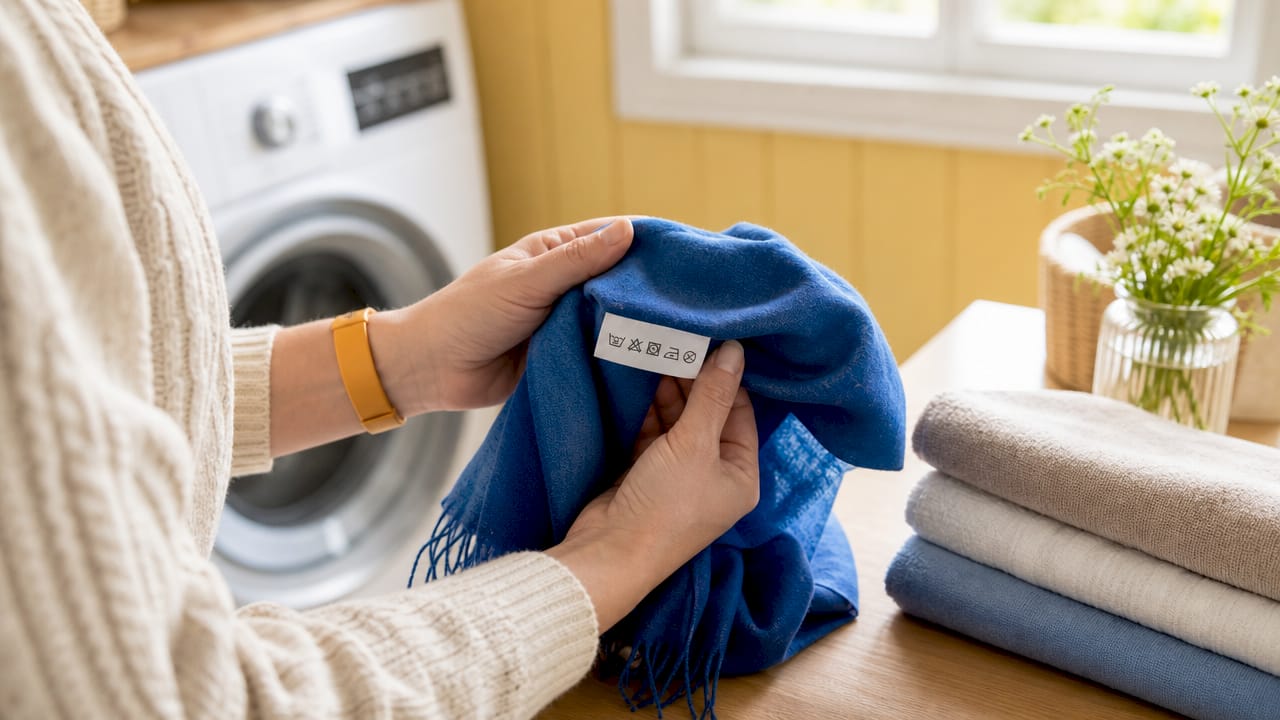
Laundry symbols are standardised pictograms on garment care labels that communicate the manufacturer’s recommended methods for washing, drying, bleaching, ironing, and professional cleaning. These clothing care symbols exist to prevent fabric damage by giving you precise, wordless instructions regardless of the language on the label. Most labels follow the ISO/GINETEX system, which is the international standard used across Europe and Asia, and symbols appear in a fixed sequence so that once you learn the order, reading any label becomes considerably more straightforward. Getting these instructions right is the difference between a garment that lasts years and one that shrinks, fades, or felts after a single wash.
What do the common laundry symbols mean?
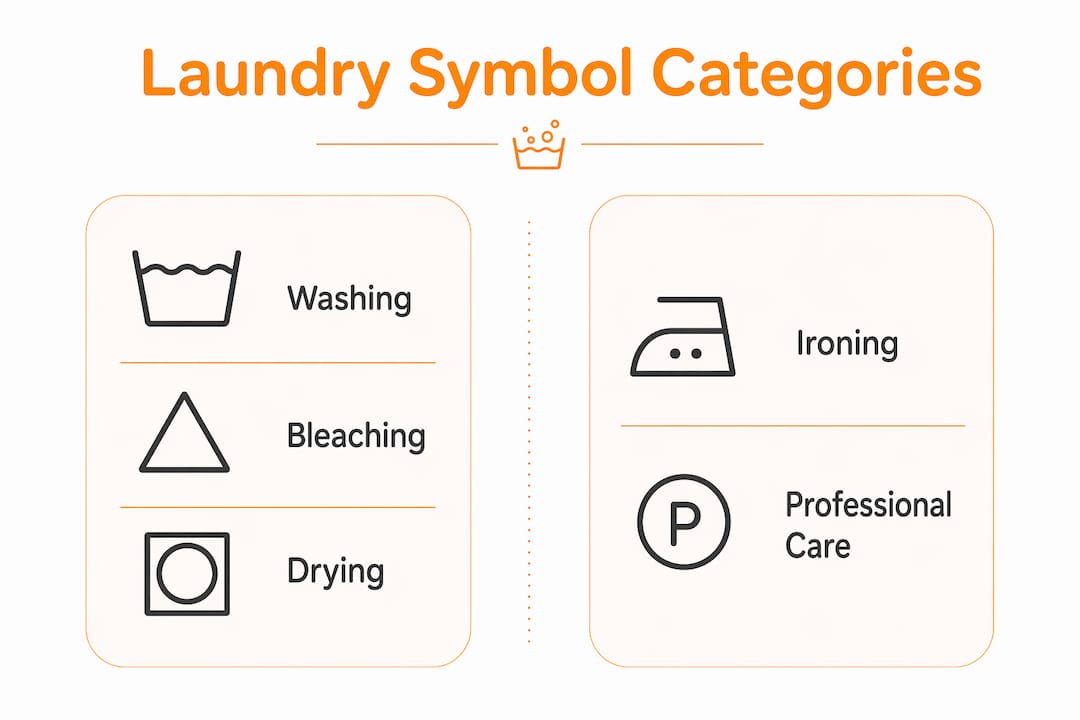
The ISO/GINETEX system organises care symbols into five categories, always presented in the same order: washing, bleaching, drying, ironing, and professional care. This consistent sequence means you can scan a label from left to right and work through each stage of the care process methodically. A crossed symbol in any category means that treatment is strictly prohibited, not merely inadvisable.
Washing symbols
The washing symbol is a tub icon. A number inside the tub indicates the maximum temperature in degrees Celsius, so a tub showing 40 means wash at no more than 40°C. Bars beneath the tub indicate the agitation level permitted: no bar means maximum agitation, one bar means medium agitation, and two bars means minimal agitation. A hand inside the tub means hand wash only, with a maximum temperature of 40°C.
Bleaching symbols
Bleaching is represented by a triangle. An empty triangle means any bleach is permitted. A triangle with two diagonal lines means only non-chlorine bleach should be used. A crossed triangle means no bleach of any kind. These distinctions matter considerably for white garments, where the temptation to use chlorine bleach on a non-chlorine-only fabric can cause permanent yellowing or fibre breakdown.
Drying symbols
The drying symbol is a square. A circle inside the square indicates tumble drying is permitted, with dots inside the circle showing the heat level: one dot for low heat, two dots for medium heat. A crossed tumble dry symbol means machine drying is not permitted. Lines inside the square without a circle indicate natural drying methods, such as line drying, drip drying, or drying flat.
Ironing symbols
The ironing symbol is an iron shape. Dots on the iron indicate the maximum temperature: one dot for 110°C, two dots for 150°C, and three dots for 200°C. Steam lines beneath the iron indicate whether steam is permitted. A crossed iron means do not iron at all, which is particularly common on synthetic fabrics and embellished garments.
Professional care symbols
Professional care symbols are circles containing letters. The letter P indicates dry cleaning with specific solvents, whereas F indicates a different solvent group. A W inside a circle means wet cleaning by a professional. Bars beneath the circle indicate the gentleness level required, and a crossed circle means do not dry clean. These symbols are primarily intended to guide professional cleaners, although they also inform you when home care is not appropriate.
Pro Tip: Photograph the care label of every new garment before the label fades or tears. Store the images in a dedicated folder on your phone so you can reference the washing instructions even after the physical label has worn away.
How do international laundry symbol standards differ?
The two principal systems governing fabric care labels are the ISO/GINETEX standard and the North American ASTM D5489 standard, and they differ in meaningful ways that can cause confusion when garments are purchased abroad or imported.
| Feature | ISO/GINETEX (Europe and Asia) | ASTM D5489 (North America) |
|---|---|---|
| Temperature indication | Numeric degrees Celsius inside tub | Dots inside tub (one to six dots) |
| Text requirement | Symbols alone are generally sufficient | Text must accompany symbols for compliance |
| Bleaching symbols | Triangle system | Triangle system, broadly similar |
| Professional care | Circle with letters | Circle with letters, broadly similar |
| Regulatory body | ISO/GINETEX international standard | US FTC Care Labeling Rule |
The US Federal Trade Commission’s Care Labeling Rule requires that apparel labels carry permanent care instructions listing at least one safe washing or cleaning method. This means a US label may list only one safe method even if several others are equally suitable, which can mislead consumers into thinking a garment is more delicate than it actually is. The Dry Cleaning and Laundry Institute International notes that garments sold in the US must carry a care label with at least one safe cleaning method, and professional cleaners are trained to interpret these labels to determine the best possible treatment.
Some apparel companies develop proprietary care icons alongside international standards, although these custom symbols must be accompanied by explanatory text for US FTC compliance. This practice can create labels that appear more complex than necessary, particularly for consumers unfamiliar with a brand’s specific iconography. A growing number of manufacturers are also integrating QR codes into care labels, allowing garments to link directly to detailed digital care instructions, which is a practical development for garments with complex multi-fabric constructions.
What are common laundry symbol misunderstandings?
Many garment care mistakes stem from a small number of persistent misunderstandings about what symbols actually mean. Addressing these directly can prevent costly damage to clothing.
A crossed symbol is an absolute prohibition, not a suggestion. Many people treat a crossed tumble dry symbol as a caution rather than a firm instruction, and the result is shrinkage or distortion that cannot be reversed. The same applies to a crossed iron symbol: ironing a garment labelled with this symbol, even briefly, can melt synthetic fibres or flatten delicate surface textures permanently.
The dot system for temperature and heat is precise, not approximate. One dot on a washing tub in the North American ASTM system corresponds to a cold wash, whereas two dots indicate warm. Treating these as rough guides rather than specific settings risks washing a cold-only garment in warm water, which is a common cause of shrinkage in wool and structured knitwear.
The bar system beneath washing and drying symbols is the detail most frequently overlooked. Two bars beneath a washing tub means the garment requires a delicate or wool cycle, not simply a cooler wash on a standard cycle. The reduced agitation is as important as the temperature, particularly for loosely woven fabrics and garments with embellishments.
When a label is unclear or partially worn, the correct approach is to follow the mildest possible care method. A cold, gentle hand wash is unlikely to damage any fabric, whereas an incorrect high-temperature machine wash can cause irreversible harm. Professional cleaning symbols on a label indicate that home care is not recommended, and attempting to replicate dry cleaning at home using consumer products rarely produces equivalent results.
Pro Tip: When washing a garment for the first time, check the label for the bar system beneath the tub symbol before selecting your machine cycle. Many modern washing machines label their cycles with the number of bars they correspond to, making it straightforward to match the label to the correct setting.
How does understanding laundry symbols improve your garment care routine?
Applying laundry care instructions correctly produces measurable benefits across the lifespan of a garment. The following steps outline how each symbol category translates into practical improvements in your laundry routine.
Select the correct wash temperature. Washing at the maximum permitted temperature rather than a lower setting does not clean more effectively for most household soiling, but it does accelerate fabric degradation. Following the temperature indicated on the label preserves colour, fibre structure, and garment shape over repeated washes.
Choose the appropriate drying method. Tumble drying a garment labelled for flat drying causes uneven shrinkage and distortion that is rarely recoverable. Drying flat, line drying, or drip drying as indicated by the symbol adds very little time to the process while protecting the garment’s original dimensions.
Iron at the correct temperature. Ironing at too high a temperature is one of the most common causes of fabric damage in the home. Matching the iron’s setting to the dots on the label, and checking whether steam is permitted, preserves the fabric surface and prevents shine marks on dark fabrics.
Recognise when professional care is necessary. A professional care symbol on a garment is not a commercial suggestion; it indicates that the fabric or construction requires treatment that home equipment cannot safely replicate. Heeding this instruction and using a reputable dry cleaner protects garments that represent a significant investment.
Reduce clothing replacement costs. Correct garment care directly reduces the frequency with which clothing needs replacing. A well-maintained laundry room setup with clearly organised products and a reliable washing machine makes it considerably easier to follow care instructions consistently, which compounds into meaningful savings over time.
Key takeaways
Correct interpretation of laundry symbols is the single most effective way to prevent fabric damage and extend the working life of your clothing.
| Point | Details |
|---|---|
| Symbols follow a fixed order | Washing, bleaching, drying, ironing, and professional care always appear left to right on a label. |
| Crossed symbols are prohibitions | A crossed symbol means that treatment is strictly forbidden, not merely cautioned against. |
| Bars indicate agitation level | Two bars beneath a tub symbol means a delicate cycle is required, not simply a cooler temperature. |
| US labels may list only one method | The FTC Care Labeling Rule permits listing just one safe cleaning method, which may not reflect all safe options. |
| When in doubt, use the mildest method | A cold, gentle wash is safe for almost any fabric when the label is unclear or damaged. |
Victor’s view on reading care labels properly
Most people I encounter have never paid attention to the bars beneath the washing tub symbol. They notice the temperature, they might notice a crossed symbol, but the bars are invisible to them. This is the single most common reason garments come out of the machine distorted or pilled, because the agitation level is as consequential as the temperature, and standard cycles on most machines are far more aggressive than loosely woven or delicate fabrics can tolerate.
The other pattern I see repeatedly is the assumption that professional care symbols are optional. They are not. A circle with a P or an F on a label exists because the fabric or the construction of that garment will not survive water-based cleaning without damage. Attempting to hand wash a dry-clean-only garment, even carefully, frequently results in shrinkage, colour bleed, or structural collapse that no amount of careful drying will correct.
Learning to read a care label properly takes perhaps twenty minutes of focused attention. After that, it becomes automatic. The return on that investment is clothing that lasts considerably longer, fewer laundry mishaps, and the confidence to care for more delicate or expensive garments without anxiety. Patience with the label at the start of the process is always less costly than dealing with the consequences of ignoring it.
— Viktor
How Elserve supports your laundry care routine
A thorough understanding of laundry symbols only delivers its full benefit when your washing machine is performing correctly. A machine that cannot reach the specified temperature, maintain a gentle cycle, or complete a full spin will undermine even the most careful label-reading.
Elserve provides domestic appliance repairs across London in two-hour time slots, so a faulty washing machine does not leave you without a reliable laundry routine for days at a time. Whether the issue is a drum that will not spin, a temperature control fault, or a cycle that fails to complete, Elserve’s technicians diagnose and repair the problem efficiently. Keeping your machine in good working order is as much a part of proper garment care as reading the label correctly. You can also support your machine’s longevity by learning how to flush your washer regularly to prevent residue build-up that affects cycle performance.
FAQ
What are laundry symbols and why are they used?
Laundry symbols are standardised pictograms on garment care labels that indicate the manufacturer’s recommended methods for washing, drying, bleaching, ironing, and professional cleaning. They exist to prevent fabric damage by providing clear, language-independent care instructions.
What does a bar beneath a washing symbol mean?
A bar beneath the washing tub symbol indicates the agitation level permitted: one bar means medium agitation, and two bars means minimal agitation, corresponding to a delicate or wool cycle on most machines.
How do US laundry labels differ from European ones?
US labels follow the FTC Care Labeling Rule and the ASTM D5489 standard, which uses dots rather than numeric temperatures and requires text to accompany symbols. European labels typically follow the ISO/GINETEX system, where numeric temperatures inside the tub symbol are standard and text is not always required.
What does a crossed symbol on a care label mean?
A crossed symbol means that the indicated treatment is strictly prohibited. A crossed tumble dry symbol means no machine drying, and a crossed iron means the garment must not be ironed under any circumstances.
When should I use a professional cleaner instead of washing at home?
A circle symbol on the care label, particularly one containing the letters P, F, or W, indicates that professional cleaning is required. Attempting to replicate dry cleaning at home risks irreversible damage to the fabric or garment construction.
Recommended
Recent Post
_(2)_(1).png)
Elserve Featured by USA News for Trusted Appliance Repairs in London
2026-10-18 17:01:41

Act Fast: Signs of Faulty Wiring in London Homes, £42 Diagnostics
2026-10-10 08:12:45

ELSERVE Joins Which? Trusted Traders
2026-09-30 15:29:14
 Looking for a fast and reliable appliance repair service?




ELSERVE is a registered company in England. Registered number 09798443. VAT number 407675383
Some images used on this website are stock photographs used for illustrative purposes only and may not depict ELSERVE employees, customers, or actual service visits

-
Elserve Featured by USA News for Trusted Appliance Repairs in London
2026-10-18 17:01:41
-
Act Fast: Signs of Faulty Wiring in London Homes, £42 Diagnostics
2026-10-10 08:12:45
-
ELSERVE Joins Which? Trusted Traders
2026-09-30 15:29:14