
Pet hair and appliance issues: solutions for London homes
2026-05-04 18:06:04
- Pet hair can cause hidden damage to washing machine drain pumps and dryer vent filters.
- Regular pre-wash routines and monthly cleaning significantly reduce appliance blockages and failures.
- London households face faster appliance deterioration due to hard water and dense pet populations.
Pet hair is widely regarded as a nuisance on sofas and clothing, yet its impact on household appliances is far more consequential and far less understood. Washing machines and dryers in particular bear the brunt of pet ownership, accumulating hair in hidden crevices that standard cleaning simply does not reach. London households, where pet ownership is high and living spaces are often compact, face an elevated risk of premature appliance failure as a result. This article sets out practical, evidence-backed strategies to help you protect your machines, extend their working life, and avoid the considerable expense of unnecessary repairs or replacements.
Table of Contents
- How pet hair affects your appliances
- Essential pre-wash routines for pet owners
- Regular cleaning methods to avoid common appliance failures
- When standard cleaning isn’t enough: advanced solutions for persistent pet hair
- Why most people underestimate the risks of pet hair in appliances
- Get expert help for pet hair and appliance issues
- Frequently asked questions
Key Takeaways
| Point | Details |
|---|---|
| Start with prevention | Removing pet hair before washing and using a no-heat dryer cycle greatly reduces appliance risks. |
| Adopt regular cleaning routines | Monthly washer cleans and daily lint trap checks help your appliances last longer and work safely. |
| Know when to seek expert help | Persistent issues call for professional repairs or advanced appliances, preventing costly breakdowns. |
| Pet care impacts appliances | Certain pet breeds and London’s hard water make vigilant maintenance even more important. |
How pet hair affects your appliances
Now that we have set the context, let us look at precisely how pet hair creates real issues inside your home’s appliances. The problems are not always immediately visible, which is precisely what makes them so damaging over time.
Washing machines are among the most vulnerable appliances in a pet-owning household. When you wash items covered in pet hair, that hair does not simply rinse away. Instead, it accumulates inside the drum, collects around the rubber door gasket, and works its way into the drainage system. Pet hair clogs washing machine drain pumps and the drum itself, leading to poor drainage and measurable mechanical stress on the motor. Over time, a partially blocked drain pump must work significantly harder, which shortens its operational lifespan and can result in costly appliance repairs.
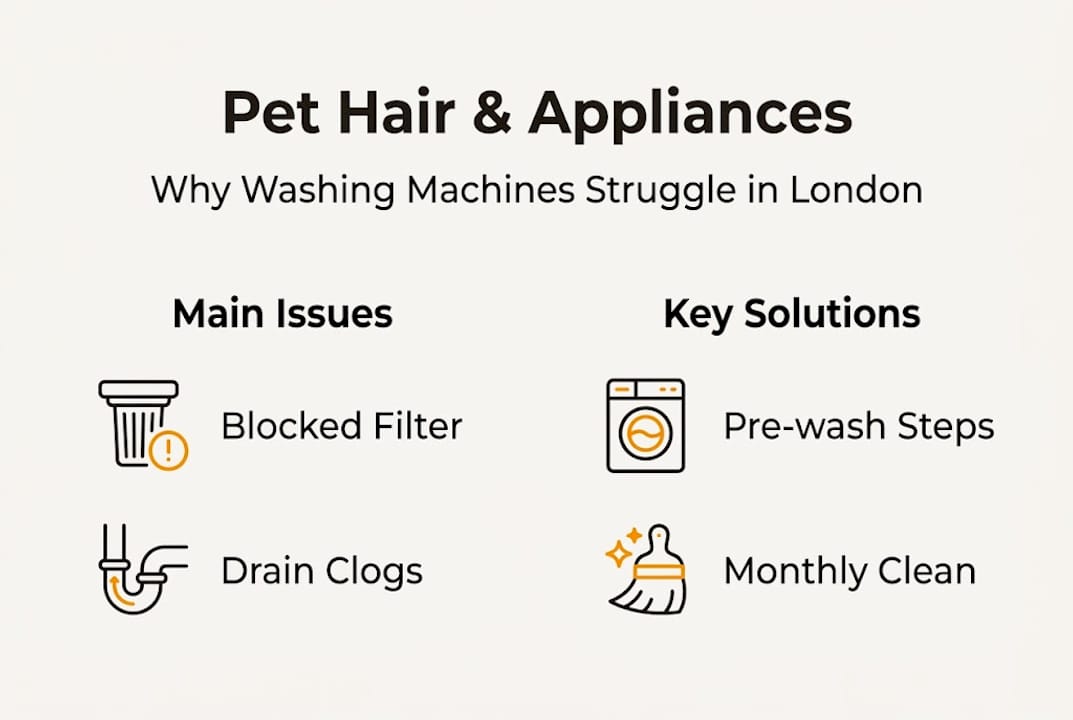
Dryers present a different but equally serious concern. Lint traps clog with pet hair at a far faster rate than with standard laundry, and a blocked lint trap is not merely an efficiency issue. It is a recognised fire hazard. Restricted airflow forces the appliance to overheat, which can damage heating elements and, in severe cases, create conditions for ignition within the vent duct.
The breed of your pet also matters considerably. Dogs and cats with double coats or particularly fine fur, such as Siberian huskies or Persian cats, shed at a volume that overwhelms even well-maintained filters. London’s notably hard water compounds this problem further, as mineral deposits cause pet hair to bind more stubbornly to drum surfaces and drainage components, making routine rinsing far less effective. Understanding cleaning for pets in hard-water areas is therefore especially relevant for households across Greater London.
Blocked vents and filters carry an additional risk that renters in particular should be aware of: they can void your appliance warranty. Many manufacturers specify that damage arising from inadequate maintenance is excluded from warranty coverage, meaning a repair that could have been avoided entirely may end up being charged in full.
Key fact: Pet hair does not just affect the visible parts of your appliances. It infiltrates drainage pumps, vent ducts, and internal filters, where it can remain undetected for months before causing a breakdown.
- Drum interiors accumulate matted wet pet hair after every wash cycle.
- Door gaskets on front-loading machines trap hair in their folds, encouraging mould alongside blockages.
- Drain pumps are placed under sustained stress when hair restricts water flow.
- Dryer lint traps fill faster with fine pet hair than with fabric lint alone.
- Vent ducts can become partially or fully obstructed without any outward warning signs.
Essential pre-wash routines for pet owners
Understanding the risks is one thing, but what can you actually do before every wash to protect your investment? A consistent pre-wash routine is, in practice, the single most effective measure available to pet owners.
The following steps, applied before each laundry load, will significantly reduce the volume of pet hair entering your machine.
- Shake garments and bedding outdoors to dislodge loose hair before bringing items inside.
- Use a lint roller or slightly dampened rubber glove to gather remaining surface hair from fabrics.
- Place the items in your dryer on a no-heat cycle for ten minutes to loosen embedded hair into the lint trap before washing.
- Clear the lint trap thoroughly after this preliminary cycle, disposing of the collected hair.
- Load items into the washing machine and, where your appliance manual permits, add half a cup of white distilled vinegar to the rinse cycle to help release any remaining fibres.
Rubber gloves deserve particular mention here. Running a damp rubber glove across upholstery or clothing generates a static charge that lifts pet hair remarkably well, often outperforming a standard lint roller on dense fabrics such as fleece or velour. For expert pet cleaning tips beyond laundry, specialist guidance can help you extend these principles to sofas, curtains, and carpets.
Vinegar, when used appropriately, acts as a fabric softener that reduces static in the drum, thereby preventing pet hair from clinging to the machine’s interior surfaces. However, it is essential to consult your appliance manual before introducing vinegar to your wash routine, as some manufacturers advise against its use in certain machine types due to potential effects on rubber seals.
Pro Tip: The preliminary no-heat dryer cycle is particularly effective for items like pet blankets and cushion covers. Rather than sending a heavily hair-covered item directly to your washer, this two-step approach captures the majority of hair in the lint trap, where it is easily removed, rather than in your machine’s drainage system, where it is not.
According to appliance care guidance, pre-treating laundry in this way prevents the majority of machine blockages before they have an opportunity to develop. For residents seeking broader maintenance tips across all their domestic appliances, building this kind of habit into weekly routines pays genuine dividends over time.
Regular cleaning methods to avoid common appliance failures
Pre-wash routines help, but ongoing cleaning routines are your best defence against appliance failure. Even with diligent pre-treatment, small quantities of pet hair will enter your machines over time, and regular internal cleaning is what prevents gradual accumulation from becoming a significant fault.
For washing machines, the recommended approach involves running an empty self-clean cycle at least once per month. Most modern machines include a dedicated drum-clean programme; if yours does not, a hot cycle at 60°C with no laundry and no detergent achieves a similar result. Following this, wipe the drum, gasket, and filter manually using a damp cloth to remove any residual hair or deposits. The pump filter, usually located behind a small panel at the base of front-loading machines, should be unscrewed and rinsed under running water during this monthly session.
For dryers, the lint trap requires attention after every single use, not just after loads containing pet items. Clean the dryer vent twice yearly; a long flexible brush designed for this purpose is readily available from hardware retailers and is straightforward to use without professional assistance. Maintaining clear vents not only reduces fire risk but also keeps your dryer operating at full efficiency, which reduces energy consumption and drying times. For pet-friendly cleaning advice covering additional areas of the home, it is worth consulting a resource that addresses the full range of surfaces affected by pet hair.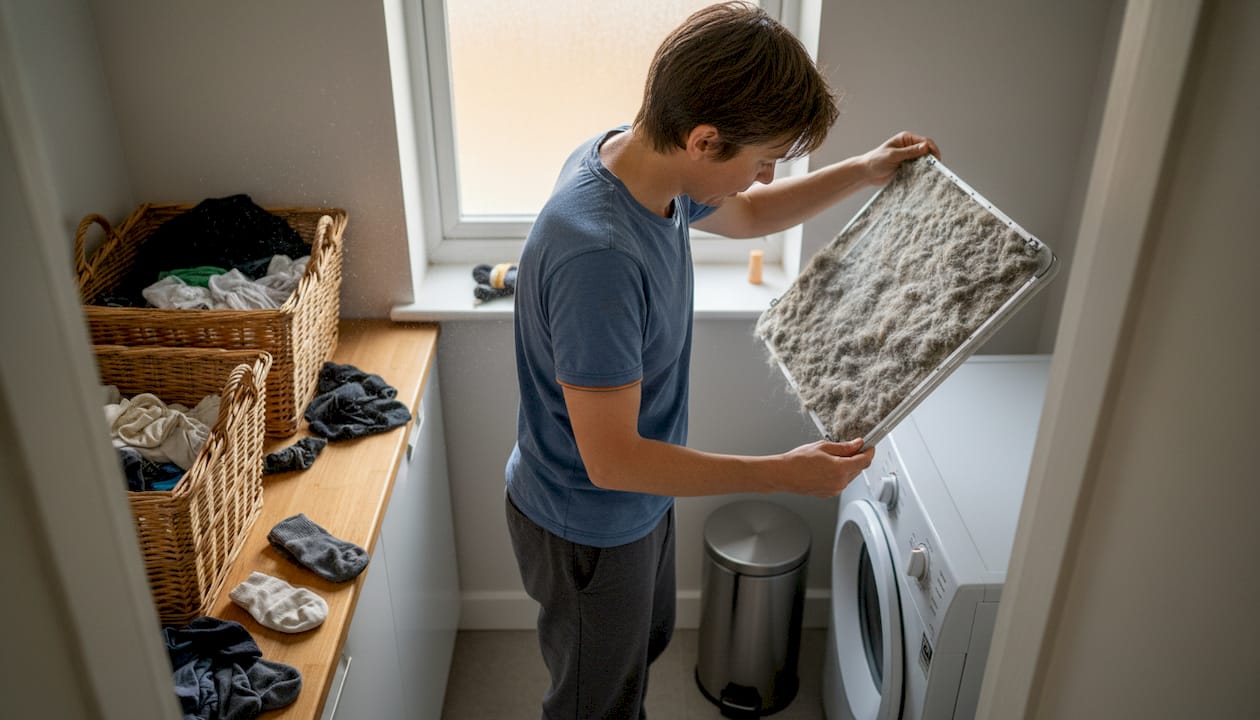
The following table summarises the recommended cleaning schedule for pet-owning households.
| Task | Frequency | Notes |
|---|---|---|
| Lint trap clearance | After every use | Essential after any pet-hair laundry |
| Drum and gasket wipe | Weekly | Focus on folds in the door seal |
| Self-clean cycle | Monthly | Use drum-clean programme or hot empty cycle |
| Pump filter rinse | Monthly | Check manual for filter location |
| Dryer vent inspection | Every six months | Use a specialist flexible brush |
Pro Tip: If you notice your washing machine taking longer than usual to drain, or your dryer producing a burning smell, do not delay. These are early indicators of blockages that, if left unaddressed, will escalate into more serious mechanical faults. Arrange regular appliance cleaning or a professional inspection at the first sign of either symptom.
- Never use abrasive cloths inside the drum, as these can cause micro-scratches that harbour bacteria and hair.
- Avoid over-filling the drum, as compacted laundry prevents effective rinsing of pet hair.
- Keep the washing machine door ajar between cycles to allow the drum to dry and discourage mould growth around the gasket.
When standard cleaning isn’t enough: advanced solutions for persistent pet hair
But what if, despite everything, stubborn pet hair still causes recurring issues? There are households where standard routines, however diligently followed, cannot fully contain the problem.
The clearest signs that standard cleaning is insufficient include persistent slow drainage in your washing machine, clothes emerging from the dryer still damp after a full cycle, and unusual noise from the drain pump during a wash. These symptoms indicate that hair has accumulated beyond what surface cleaning can address and that internal components may already be affected.
In such circumstances, comparing your current appliance against models specifically designed for pet-owning households is worthwhile. Some manufacturers, notably Maytag, now offer machines with pet-specific wash cycles that use altered agitation and rinse sequences to expel hair more effectively. These cycles are particularly relevant for households with double-coated breeds, where hair volume is substantially higher than average.
Important note for renters: Before attempting any deep-clean procedure or internal inspection beyond basic filter rinsing, consult your tenancy agreement. Certain maintenance actions, if performed incorrectly, may constitute damage and affect your deposit. Non-damaging routines such as pre-treating laundry and regular lint trap clearance remain entirely appropriate without landlord consultation.
For London households dealing with hard water, the challenge is compounded further. Hard water minerals cause hair fibres to adhere more firmly to internal surfaces, and hard water worsens residue particularly in households with husky-type breeds. In these cases, a monthly descaling treatment used alongside the self-clean cycle can meaningfully reduce adhesion. Vinegar should not be repeated if your machine manual advises against it; a manufacturer-approved descaling product is the safer alternative.
When professional intervention becomes necessary, specialist repair services are equipped to dismantle and clear drain pumps, inspect internal vent pathways, and restore appliances to their intended operating condition without voiding warranties. For broader carpet cleaning for pet owners needs, specialist services exist that address the full extent of pet hair accumulation in the home. Seeking professional appliance help early, rather than waiting for a complete breakdown, is invariably more cost-effective.
| Situation | Recommended action |
|---|---|
| Slow drainage, recurring | Professional pump inspection |
| Clothes damp after full cycle | Vent cleaning or heating element check |
| Unusual drum noise | Engineer assessment |
| Double-coated breed household | Pet-specific appliance cycle or model |
| Hard water area | Monthly descale alongside self-clean |
Why most people underestimate the risks of pet hair in appliances
After reviewing all the available guidance, the most important point is one that rarely appears in standard appliance care advice: visible cleanliness is not the same as mechanical safety. Many pet owners wipe down the drum, clear the lint trap occasionally, and consider the matter resolved. What they do not see is the slow accumulation of compressed hair inside the drain pump, or the partial obstruction building in the vent duct over many months.
In London specifically, the combination of hard water, smaller living spaces that limit ventilation, and a notably high density of pet-owning households creates conditions in which appliance degradation occurs faster than the national average. An appliance that might last fifteen years with straightforward maintenance in a lower-risk household may require appliance maintenance advice and intervention considerably sooner in these circumstances.
The habits that genuinely protect appliances are small, consistent, and unglamorous: the preliminary dryer cycle, the monthly filter rinse, the twice-yearly vent check. They are not difficult, but they require regularity. Most breakdowns we encounter are not the result of a single dramatic failure but of incremental neglect that reached a tipping point.
Get expert help for pet hair and appliance issues
Having explored all the practical solutions, sometimes expert help is the logical next step, particularly when recurring faults suggest that standard maintenance has not been sufficient to address the underlying issue.
At Elserve, we provide domestic appliance repairs across London, assisting homeowners and renters with everything from blocked drain pumps to full dryer vent clearances. Our engineers are familiar with the particular challenges that pet hair and hard water present in London properties, and we work to resolve faults efficiently, protecting both your appliance and your warranty. If your washing machine or dryer is showing signs of persistent trouble, book an appliance repair with our team and we will assess the issue promptly, helping you avoid the considerably higher cost of a full appliance replacement.
Frequently asked questions
Can pet hair really damage washing machines and dryers?
Yes. Pet hair clogs drain pumps and the drum, leading to poor drainage and mechanical stress, while lint traps blocked by hair create a measurable fire risk in dryers.
How can I prevent pet hair from blocking my washing machine?
Pre-treat laundry with a lint roller and a ten-minute no-heat cycle before washing, and clean your machine’s pump filter at least once per month.
How often should I clean my washer and dryer to reduce pet hair issues?
Run a self-clean cycle monthly and wipe the drum, gasket, and filter at the same time; clean the lint trap after every single use and inspect the dryer vent every six months.
Are some pet breeds worse for appliance hair problems?
Yes. Double-coated breeds shed more significantly, and London’s hard water causes their hair to bind more stubbornly to internal machine surfaces, making blockages more likely.
Does adding vinegar to the wash help with pet hair?
When your machine’s manual permits it, vinegar in the rinse cycle helps loosen pet hair from fabrics and reduces static in the drum; always verify compatibility with your specific appliance first.
Recommended
Recent Post

Appliance repair call-out fee: what London homeowners pay
2026-09-07 09:04:41

The role of washing machine control board explained
2026-07-27 15:59:24

Why dishwasher pumps fail: causes, symptoms, and fixes
2026-07-23 23:53:23
Looking for a fast and reliable appliance repair service?



ELSERVE is a registered company in England. Registered number 9798443. VAT number 407675383


-
Appliance repair call-out fee: what London homeowners pay
2026-09-07 09:04:41
-
The role of washing machine control board explained
2026-07-27 15:59:24
-
Why dishwasher pumps fail: causes, symptoms, and fixes
2026-07-23 23:53:23