
Why oven glass cracks and how to prevent it
2026-05-26 07:42:15
- Oven glass failure is mainly caused by thermal shock and surface damage, not manufacturing defects.
- Preventive habits like avoiding cold items on hot glass and gentle cleaning reduce risks significantly.
- Professional inspection and timely replacement are recommended if cracks or damage are noticed.
Oven glass cracking without warning is one of those domestic incidents that genuinely catches homeowners off guard. One moment the door looks perfectly intact; the next, there is a spiderweb of fractures or, in more alarming cases, complete shattering. Many assume a direct blow must be responsible, yet the reality is considerably more nuanced. Understanding the underlying causes, from thermal stress to microscopic manufacturing flaws, equips you to take meaningful preventive steps rather than simply hoping for the best. This article examines what makes oven glass vulnerable, what most commonly causes it to fail, and how straightforward habits can significantly reduce your risk.
Table of Contents
- The science behind oven glass: Why is it vulnerable?
- Top causes of oven glass cracking
- Thermal shock vs. mechanical stress: Which is more to blame?
- Practical strategies: How to prevent cracked oven glass
- Our take: Why prevention trumps panic
- Expert oven glass repair and support
- Frequently asked questions
Key Takeaways
| Point | Details |
|---|---|
| Thermal shock is the main risk | Rapid temperature changes cause most oven glass cracks, so avoid putting cold items on hot doors. |
| Surface flaws matter | Scratches or minor knocks can weaken even strong tempered glass and lead to failure. |
| Prevention is practical | Careful cleaning, gentle use, and regular checks keep your oven safe and reduce costly repairs. |
| Professional help is safest | Expert repairs ensure proper diagnosis and replacement, restoring your oven’s safety. |
The science behind oven glass: Why is it vulnerable?
Oven glass is not ordinary window pane material. It is a specifically engineered safety component, designed to withstand sustained high temperatures whilst remaining transparent and structurally sound. The manufacturing process most commonly used is thermal tempering, which produces what is known as tempered glass. During this process, the glass is heated to extreme temperatures and then rapidly cooled, creating a surface layer under compression whilst the interior remains under tension. This structural arrangement makes tempered glass considerably stronger than untreated glass, with some estimates suggesting it is up to four to five times stronger than standard float glass.
However, this same internal tension creates an important vulnerability. Should the equilibrium between the compressed outer surface and the tensioned core be disrupted, the energy stored within the glass releases rapidly, causing what is known as brittle failure. In practical terms, this means the glass can shatter suddenly, often with little visible warning beforehand. The good news is that tempered glass is engineered to break into small, relatively blunt fragments rather than sharp shards, thereby reducing the risk of serious injury.
The critical issue for homeowners is that surface integrity matters enormously. Even minor scratches, chips, or flaws on the glass surface disturb the balance of internal forces, making failure significantly more likely under thermal or mechanical stress. You can explore appliance glass repairs to understand when professional assessment is warranted.
A common misconception is worth addressing directly:
Most homeowners assume oven glass only breaks following a significant physical impact. In reality, pre-existing surface damage combined with everyday thermal stress is frequently sufficient to trigger failure, often without any obvious prior incident.
Key vulnerability factors include:
- Surface scratches from abrasive cleaning materials
- Chips from metal utensils or cookware contact
- Undetected manufacturing inclusions within the glass
- Repeated cycles of rapid heating and cooling
- Poor door alignment creating uneven mechanical stress
Top causes of oven glass cracking
With the structure of tempered oven glass explained, the specific causes that lead to its failure become easier to understand and, crucially, to anticipate.
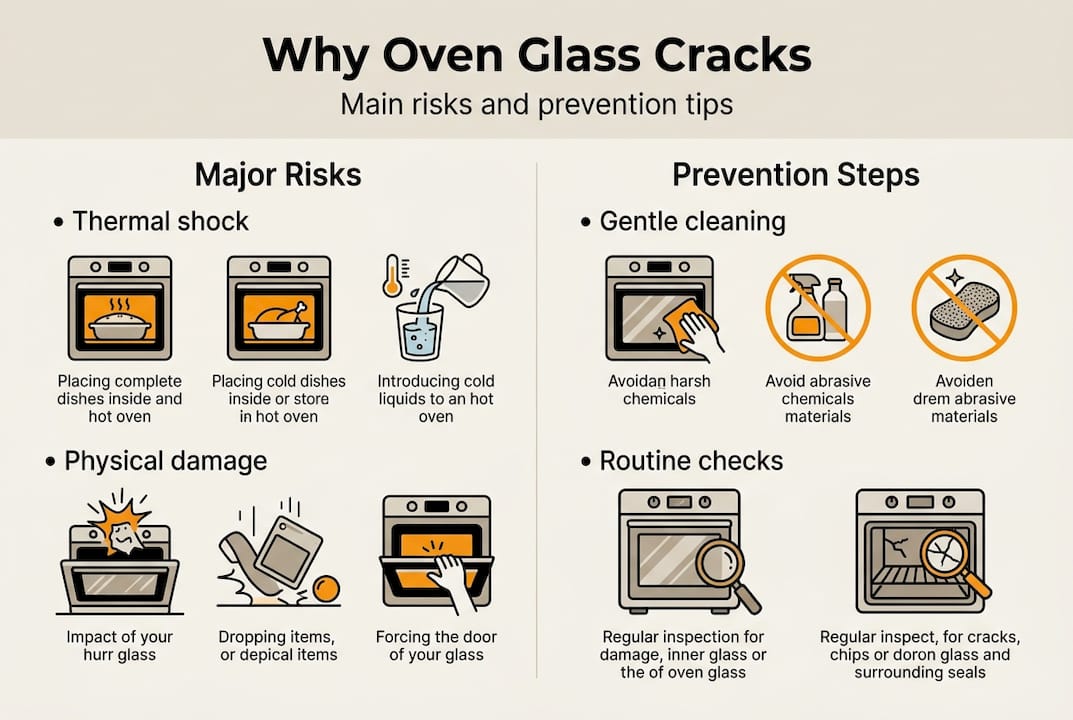
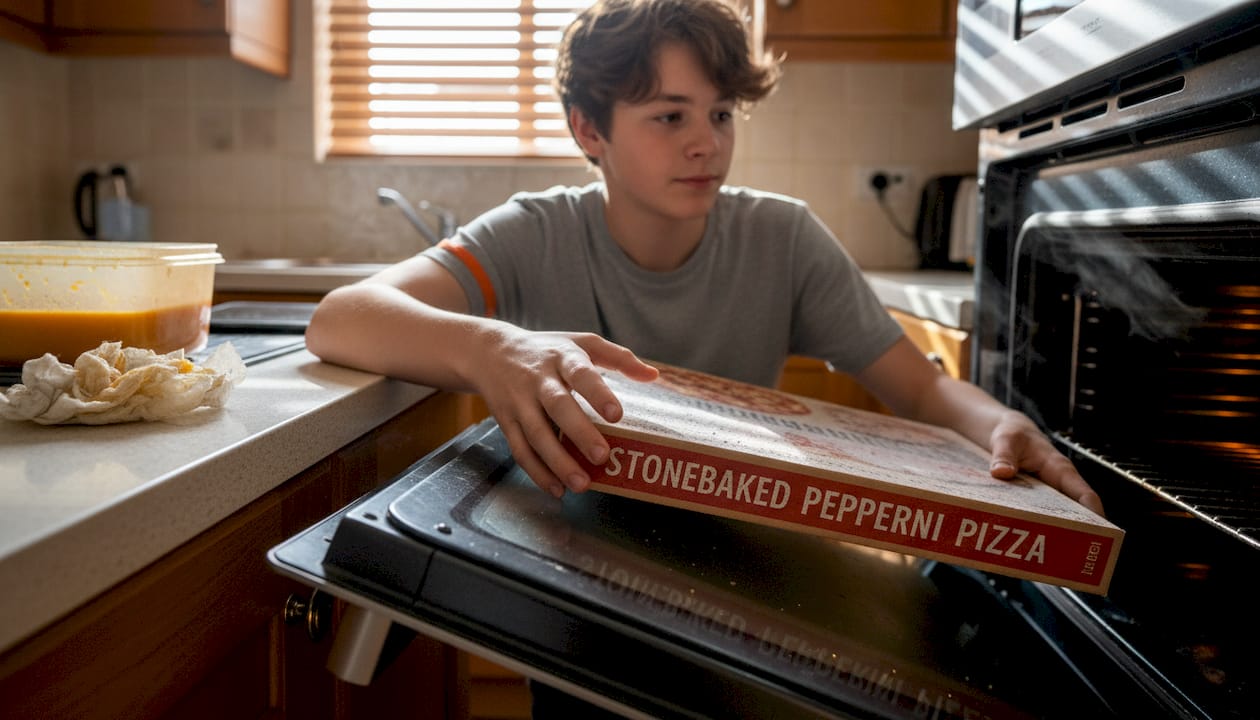
Thermal shock is widely recognised as the primary cause of oven glass cracking and shattering. This occurs when glass is subjected to a rapid, significant change in temperature. Placing a cold or frozen dish directly onto hot oven glass, or spraying cold water onto a heated door during cleaning, creates an immediate differential in expansion rates across the glass. The surface subjected to cold contracts rapidly whilst the adjacent material remains expanded, generating localised stress that the glass cannot always absorb.
Physical damage, although often discounted by homeowners, is another substantial contributor. Catching the glass with a metal oven rack as you close the door, knocking it with a heavy dish, or using abrasive cleaning pads all introduce surface flaws that compromise the glass over time rather than immediately. This delayed nature is why many people are surprised when the glass fails, as they do not associate it with an incident that occurred weeks or months earlier.
Manufacturing defects, particularly microscopic inclusions of nickel sulphide within the glass, can cause what appears to be entirely spontaneous shattering. These inclusions expand at a different rate to the surrounding glass under heat, eventually triggering fracture without any external cause.
Uneven heating from a faulty element or persistent hotspots within the oven cavity can also stress the glass repeatedly over time. Finally, mechanical wear involving ageing hinges, misaligned springs, or an improperly installed door can apply consistent lateral pressure to the glass, weakening it incrementally.
Common causes at a glance:
| Cause | Typical scenario | Risk level |
|---|---|---|
| Thermal shock | Cold item placed on hot glass | High |
| Surface damage | Scratches from abrasive cleaning | Medium to high |
| Manufacturing defect | Nickel sulphide inclusion | Low but unpredictable |
| Faulty heating element | Uneven oven temperature | Medium |
| Mechanical wear | Worn hinges or misaligned door | Medium |
Pro Tip: If you notice the oven door does not sit flush when closed, arrange a check promptly. Door misalignment places irregular mechanical stress on the glass, quietly increasing its risk of failure over time. Review oven door repair options before the issue escalates.
Thermal shock vs. mechanical stress: Which is more to blame?
Knowing the individual causes is useful, but understanding how they rank in terms of frequency and severity helps homeowners prioritise their preventive efforts.
Thermal shock accounts for the majority of oven glass failures reported by repair professionals. As a general guideline, temperature differentials exceeding 100°C applied suddenly to a single area of the glass are particularly dangerous. This explains why the habit of resting cold pans on an open oven door, or cleaning the glass whilst the oven is still warm, carries real risk.
Mechanical stress, by contrast, tends to operate more insidiously. A scratch introduced by an abrasive sponge does not cause immediate failure; instead, it creates a stress concentration point that makes future thermal or mechanical loading far more likely to result in fracture. In this sense, mechanical damage often sets the stage for thermal shock to deliver the decisive failure.
Contrasting perspectives from both repair professionals and affected homeowners reveal an interesting discrepancy. Many people who experience glass failure are convinced a manufacturing defect is responsible, particularly when the event appears spontaneous. Whilst nickel sulphide inclusions and similar defects are real, they account for a very small proportion of cases. Understanding the common causes of oven damage often reveals that user habits, rather than factory errors, are the predominant factor.
The following comparison illustrates the key differences:
| Factor | Frequency | Controllable by user? | Warning signs? |
|---|---|---|---|
| Thermal shock | Very common | Yes | Rarely visible |
| Mechanical stress | Common | Yes | Scratches, chips |
| Manufacturing defect | Rare | No | None typically |
| Mechanical wear | Moderate | Partially | Door misalignment |
The practical implication is significant. Because thermal shock and mechanical damage are both within the homeowner’s control, the majority of oven glass failures are, in principle, preventable. Manufacturing defects, although they generate considerable attention when they occur, represent a genuinely small proportion of overall cases.
Practical strategies: How to prevent cracked oven glass
Having separated controllable user behaviours from the rarer category of manufacturer defects, the focus turns to practical, preventive action that any household can adopt.
The most impactful single change you can make is to never place cold or frozen cookware directly onto hot oven glass or onto a hot oven shelf immediately above the glass panel. Allow the oven to cool partially before introducing very cold items, and similarly, allow hot cookware to cool before placing it on any cool surface near the oven. This simple adjustment directly addresses the leading cause of glass failure.
Cleaning habits deserve close attention. Gradual, careful cleaning practices consistently emerge as one of the most effective preventive measures. Use soft cloths or microfibre materials with mild, non-abrasive detergents. Avoid steel wool, scouring pads, or any cleaning agents that contain abrasive particles, as these introduce the very surface flaws that compromise the glass over time. Many homeowners also benefit from professional oven cleaning at regular intervals to maintain the appliance without risk of inadvertent damage.
Seasonal inspection of the oven door is a worthwhile habit. Check the glass for any chips, hairline scratches, or visible stress marks at least every few months. Examine the door hinges and ensure the door closes evenly and fully. If you notice any resistance, uneven seating, or visible gap when the door is shut, arrange a professional assessment promptly.
Additionally, use only oven-safe cookware rated for the temperatures you regularly cook at. Inappropriate cookware can crack under heat and transfer mechanical shock to the oven glass. For any concerns about the condition of your glass, repairing oven glass sooner rather than later is invariably the safer and more cost-effective course.
Pro Tip: Make it a habit to open and close the oven door gently and deliberately. Slamming the door is one of the most common ways homeowners unknowingly introduce cumulative mechanical stress to the glass, often without any immediate sign of damage.
Our take: Why prevention trumps panic
After working with homeowners across Greater London on domestic appliance repairs, one pattern becomes clear. The narrative around oven glass failure tends to focus disproportionately on manufacturing defects, partly because the idea of a random, unavoidable failure is more palatable than acknowledging that everyday habits are usually responsible.
However, the evidence is straightforward. User errors are far more common than genuine manufacturing faults. Thermal shock, cumulative surface damage, and mechanical wear account for the overwhelming majority of cases we encounter. This is, in one sense, genuinely good news, because it means most failures are preventable with consistent, informed habits.
Our perspective is that early action always outperforms delayed reaction. Spotting a chip or noticing a slightly misaligned door and arranging a prompt professional check is far less disruptive than managing a fully shattered door. The goal is not to create anxiety about your oven but to encourage the kind of attentive ownership that keeps appliances functioning safely for years longer. If you have any doubts about the condition of your oven glass, our oven repair expertise is available across Greater London to provide an honest, informed assessment.
Expert oven glass repair and support
If you have identified a risk or are already dealing with cracked oven glass, professional assessment is the most reliable next step. Taking action early protects both your household’s safety and the long-term condition of the appliance.
Elserve’s appliance repair service covers Greater London with flexible two-hour appointment slots, making it straightforward to arrange an oven glass assessment at a time that suits you. Their experienced engineers specialise in diagnosing the precise cause of glass failure and carrying out safe, effective replacement where required. Rather than attempting a DIY repair that could introduce further risk, booking a professional inspection gives you informed peace of mind and restores your kitchen to full working order without unnecessary delay.
Frequently asked questions
Can I use my oven if the glass is cracked?
You should avoid using the oven until the glass is replaced, as damaged tempered glass is significantly more likely to fail under further heat, posing a genuine safety risk. Continued use may also worsen the damage and increase repair costs.
Why did my oven glass crack during cleaning?
Applying cold water or cleaning materials to hot glass creates a rapid temperature differential, which is the primary mechanism behind thermal shock failure. Always allow the oven to cool fully before cleaning the glass panel.
Is oven glass breakage covered under warranty?
Some manufacturers cover spontaneous breakage linked to nickel sulphide inclusions or similar defects, but most warranties specifically exclude damage attributed to user error or improper use. It is worth checking your documentation and contacting the manufacturer directly.
How can I tell if my oven glass is at risk of failing?
Inspect the glass for chips, visible scratches, or stress marks, and check that the door closes evenly without resistance. Surface flaws and mechanical faults both increase the probability of failure under routine heating cycles, making early detection genuinely valuable.
Recommended
Recent Post

ELSERVE Joins Which? Trusted Traders
2026-09-30 15:29:14

How to fix a slow spin cycle in your washing machine
2026-09-20 03:37:36

Appliance repair call-out fee: what London homeowners pay
2026-09-07 09:04:41
 Looking for a fast and reliable appliance repair service?




ELSERVE is a registered company in England. Registered number 09798443. VAT number 407675383
Some images used on this website are stock photographs used for illustrative purposes only and may not depict ELSERVE employees, customers, or actual service visits



-
ELSERVE Joins Which? Trusted Traders
2026-09-30 15:29:14
-
How to fix a slow spin cycle in your washing machine
2026-09-20 03:37:36
-
Appliance repair call-out fee: what London homeowners pay
2026-09-07 09:04:41